Showing posts sorted by date for query HP4E. Sort by relevance Show all posts

Wednesday, September 19, 2018

Graphene with Quadrays

Another Test

Continuing my meditation on "user-friendly", I tried to pump more life into Quadrays by using them to ray-trace graphene-like imagery.

Some thinkers project a coming Age of Carbon, given all the nano stuff we've learned since the discovery of buckminsterfullerene.  Graphene, surprisingly, is a relative latecomer.  We already knew "pencil lead" was really graphite that rubbed off in layers.  An individual sheet:  that wasn't so much the focus.  Diamond was another allotrope.

Then Bf came along (C60) and a sudden interest in soccer ball imagery, on which I later capitalized using hash tag HP4E ("hexapents for everyone").  Nanotubes would maybe turn out to be good for something.  Separating them into isomers was a technological challenge.  Then came graphene.

However, from another angle, we've been in an Age of Carbon for quite some time now, in that we understand polymer chemistry, oil refining, all manner of things carbon.  As a life form, we're all about hydrocarbons.

I chauffeured again today, driving my passenger to Portland Nursery.  On the way, we rescued an abandoned coffee maker, a Cuisinart model I've owned in the past.  The Coffeemaker went out the morning Melody (visiting guest) tried to use it.  So far, everything is looking promising.  I'll try making some real coffee in a minute.

Added to inventory:  two fire extinguishers, dry retardant, still under regulation pressure.

Pruned:  my tree in the margin.  The office doubles as a Portland looking house.

P1060882

Saturday, May 26, 2018

Meanwhile, in the Mapparium...

DGGS / Global Matrix

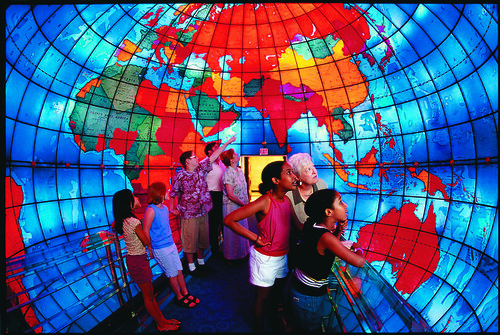
The Mapparium is a Church of Christian Science project started quite awhile back, to nurture greater global awareness within the church.  Not just secular governments should be privy to big picture world views.  I'm sure the Vatican agrees.  Spatial data management systems were an obsession of mine even then, and when AFSC paid my way to Boston, as a part of the Manhattan II project (Daniel Ellsberg and company), I made sure my pilgrimage included a visit to this holy spot.

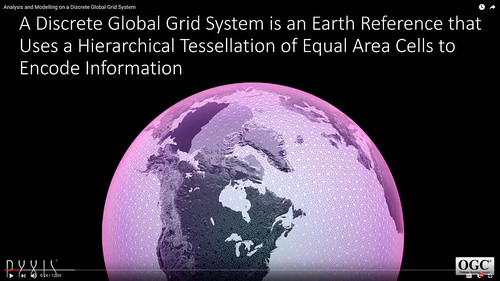
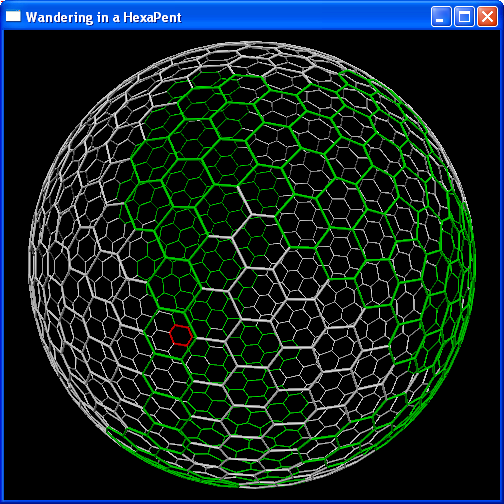
These days I'm looking at DGGS presentations on Youtube, the above picture a screen shot from one of them. Notice the "hexapent" design, a focus of my HP4E campaign.  The shoptalk of layers and levels pertains in that one may superimpose several layers at the same level, to tomographic effect, or drop down to show minerals, fossil fuel reserves, coal deposits and so forth.

If you're installing Geopandas using Anaconda, one of the best Python ecosystems, in the sense of convenient, remember to install it in its own conda environment.  conda-forge has binary incompatibilities with the default Anaconda installation that are likely to bite you in the butt.  Fiona is especially troublesome (that's a package Geopandas requires).

I know what you're thinking:  such data layers at the lower levels would be highly prized and mineral exploration companies, oil supranationals and so on, are not about to divulge whatever secrets they've already harvested at great expense.  Well, yes and no.  The downside of wholly proprietary data sets is if they're not independently auditable, as in verifiable, then confidence in their reliability may suffer, even within a company or government.

Long ago, I wondered if, as a test case, a world class corporation could establish itself outside the US jurisdiction, yet within the boundaries of the United States, per some sovereign tribal, treaty established land.  Yes, we know from recent examples that the USG doesn't honor the treaties it signs, but that's beside the point.  The question back then is whether this experiment could succeed in principle, and Global Data (not an Inc.) was established with that in mind, as a product in part, of GST (a balancing discipline for Economics the way I cast it back then, and still do to large degree).

Anyway, that's all backstory to today's meeting about DGGS, a global data data management and visualization framework not unlike Google Earth.

The Mary Baker Eddy Library/Mapparium

Having attended a Process Workshop Institute marathon yesterday (OK, only five hours, with breaks), I had some fresh perspectives to bring to the table, perhaps jarred lose from my internal groupthink matrix.

Glenn and I were able to discuss patterns of information distribution, focusing on such institutions as hair salons (including barbershops) in the archetypal small village.  Think of a WestWorld episode if that helps.

The flip side of misinformation-laced "vicious gossip" (or just "gossip") is what we might call "intelligence".  The latter often comes with caveats and disclaimers, whereas the former is often "pushed" by people in no mood to be contradicted because they have agendas, which may be time critical.  Gossips flock to tabloid journalism, which is sensationalistic by design, intended to stir up outrage in the face of scandal.

I called Uncle Bill from Ringlers along the way.  I've cut way back on beer consumption since turning sixty, but haven't gone cold turkey.  That was my 16 ounces for Friday.  Today, I had my allotted 22 ounces.  Having a budget helps.  I had taken buses 75 and 15, having returned two overdue library books on statistics to the Belmont Branch, and paid the fine of $3.50.

OSU has more than a big toe invested in DGGS waters.  I've been exploring the connections.  Having more public macroscope displays is a long time mission for World Game as well, established by the Buckminster Fuller emporium as one of a suite of related 4D enterprises.

Our meet up featured the last lecture in the Complexity series from Great Courses, by professor Scott Page.  You can't fix a broken heart with bandaids.  What Fullerians call "precession" has everything to do with the maxim:  you may control almost nothing, yet influence almost everything.

AFSC flew me to Boston for the Ellsberg summit, but also to meet with AFSC Boston and get ideas for how a youth program might work. As many a mom & pop martial arts studio will attest, having a van really helps if reaching out to minors or non-drivers, yet wanting them at some central site.  AFSC Portland actually managed without a van, but then Portland public transit system (Tri-Met) is better than average.  Check it out.

Assembling C6XTY

Friday, April 28, 2017

Portland Design Week 2017

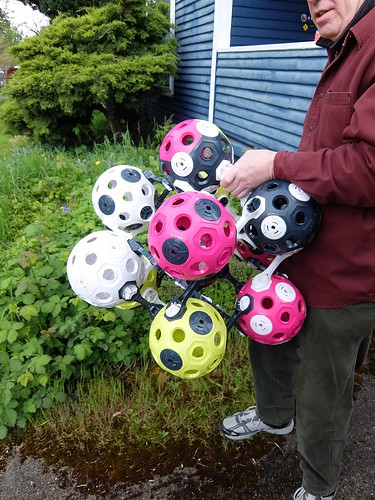
Deke with C6XTY

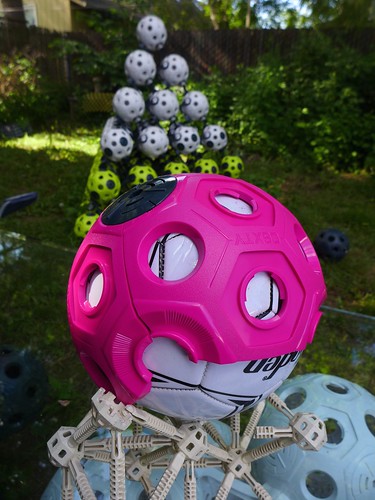
Continuing the theme of HP4E, Hexapents for Everyone, today was the long-awaited debut of C6XTY as a camera-ready product.

Glenn and Deke came over to my place for the occasion, with Sam Lanahan, the inventor, bringing inventory fresh off the ship from China, more on the way.  You'll be learning more about this invention in future blog posts.

Good catching up with Trevor Blake this week.  He knows my HP4E campaign from the "design science" angle as well.

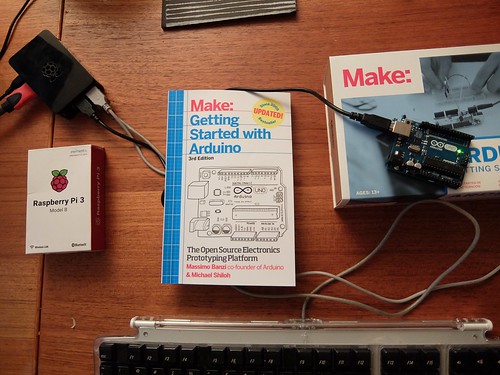
Likewise in the spirit of Design Week, I was able to get the Raspberry Pi talking to the Arduino Uno, by downloading and decompressing a nightly build of the Processing development environment.

As mentioned earlier, I'm plowing through a MOOC on Coursera, about the Internet of Things (IoT).


Design Week

Tuesday, August 16, 2016

HP4E (continued)


HP4E is a long-running campaign: "hexapents for everyone" is what it means.  A role model campaign was Guido van Rossum's CP4E, or "computer programming for everyone".  The latter had DARPA funding for long enough to get Tkinter + IDLE out the door, which popularized Python among Windows fans, one of the largest user bases in the 1990s.

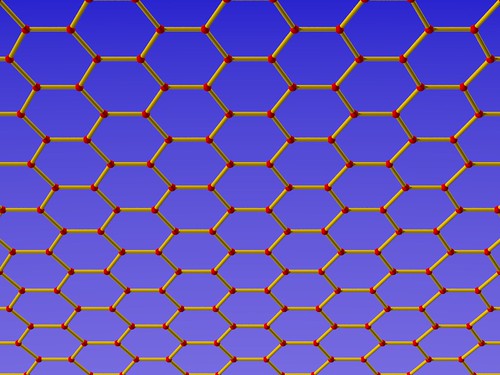
You'll find the gamer community, around Civilization especially, were hip to the idea of a "macroscope" (globe) divided into, not trapezoidal, not quadrilateral, but hexagonal, and a few pentagonal tiles.  That's a "look".  If you're into fashion, you know about "looks".  The hexagon goes well with carbon chemistry.  Why?  Graphene.  Nanotubes. Buckyballs.

As a long-time attender at ISEPP lectures, run by my friend Terry Bristol, I've been privy to a lot of hexapent talk. I even have an email from Harold Kroto, let me share it:

Date: Mon, May 27, 2013 at 8:40 AM
Subject: RE Buckminsterfullerene


Dear Kirby
Thanks for your update and link to your very interesting blog

FYI
At the end of a lecture a few weeks ago I was asked
by Martin Saunders how the name came about ...
Ed Applewhite's account indicates that I named it
and Rick did not like the name (at the time!...somewhat
of a euphemism actually!) ...but does not
give the context.  Here is an email I sent to Martin:


Dear Martin
It was very nice to meet up again and remember our discussions at Masada I shall send you a copy of our MS on Ne22 in carbonaceous chondrites as soon as I have refined the first draft and also make any useful comments (should I have them) on your MS on He@C60 as soon as I can.

At the end of my talk yesterday you asked how the name Buckminsterfullerene arose

The sequence of events is as follows: Smalley and I wrote the original draft of  the discovery manuscript together.  At one point the question arose at to what  the title should be. Smalley asked me to suggest a possible title.  I responded on the spot with these words: “C sixty colon space Buckminsterfullerene”.  Smalley typed this in exactly and to my memory made little or no comment and I guess did not think too much about it at the time.  I concocted the title on the spur of  the moment because Buckminster Fuller's structures had been one (there was another!) of the strong influences on my thinking about what the structure of C60 might be.  This was partly because I had visited Buckminster Fuller US pavilion at Expo Montreal in 1967.  In addition this beautiful night-time photograph
in special copy of Graphis magazine, devoted to Expo67, had made a very strong memorable impression in my mind.  I had suggested that we withdraw a book by BF from the Rice library which Smalley did. I was a visitor and had no library credentials.  There are very few images of the simple truncated icosahedral (soccerball) structure in the book though there is one and BF is actually standing in it.

At the time I was quietly satisfied that the –ene ending worked so perfectly from a chemical point of view and furthermore the name, though rather long, scanned very nicely...doubly satisfying.

In the Ed Applewhite article http://www.4dsolutions.net/synergetica/eja1.html (extract attached) Smalley corroborates the fact that I gave C60 this name...a name that Smalley really did not like at all as is also indicated in the Applewhite article.

Some time later Smalley received a letter from Alex Nickon about the name.  He was so disenchanted with it at the time that he gave me the letter and told me to respond as it was my invention. I did respond and here is Nickon's book entry:


I hope this answers your question satisfactorily!

Best wishes
                      harry

Saturday, September 04, 2010

BuckyBall Day

Google joined the festivities by commemorating the discovery of the BuckyBall. I got some emails from people from whom I don't usually hear (hi Josh, welcome back to the land of Mexican food).

David Koski first alerted me with a phone call, which he placed in the midst of setting up his new Apple.

As those up on their lore maybe know, the discovery of buckminsterfullerene came two years after Fuller died in 1983. His collaborator E.J. Applewhite lived to see the scientific community embrace this new discovery, and nomenclature.

Twas my distinct pleasure to attend the First International Conference on Buckyballs in Santa Barbara, as a representative of both the BFI and ISEPP. I got to meet Harold Kroto and many of the other researchers exploring this fascinating topic. I also crossed paths with a Nanotubes conference in Gothenburg.

The hexapent, or soccerball shape of the buckyball, is one I sought to popularize under the heading of HP4E (hexapents for everybody), an allusion to Guido's CP4E (computer programming for everybody).

Glenn Stockton promulgates this and related memes through his Global Matrix Studios (currently a part of the Linus Pauling Campus on Hawthorne Boulevard). Are we like Mad Men or what?

:: documentary on c60 ::

Wednesday, November 25, 2009

ONAMI Tour

ONAMI Trip
:: Wanderers @ ONAMI ::

[ looking for HP4E?  2nd to last paragraph ]

A posse of Wanderers caravaned to ONAMI today, Oregon's nanotechnology headquarters, situated on the Hewlett-Packard campus in Corvallis, but belonging to Oregon State. ONAMI is a non-profit tenant in this building, charged with managing a state investment fund aimed at assisting startups taking advantage of new breakthroughs in materials science.

Robert D. "Skip" Rung, the president and executive director, took us into the Willamette conference room on the 2nd floor and gave us a sample of his various talks, the kinds of slides he shows to investor groups, politicians, researchers, fellow citizens. He puts a lot of emphasis on the green aspects of nanotechnology, countering public fears about unforeseen consequences and/or dual use applications. He mentioned "grey goo" explicitly, along with Bill Joy's fear-mongering.

I found it poetically appropriate that this building used to house Hewlett-Packard's famous ink jet technology skunkworks. Today's nanotech, a lot of it biomedical, is all about doing more with less, making individual atoms work harder. Sometimes you only need a very small amount of something, and at the nano scale, materials tend to be mostly surface area, relative to volume, so reactive atoms will have maximal exposure. Less waste equals more green, is one equation.

Another equation is keeping Oregon at the forefront in some niches, such as hemodialysis, filtration, imaging and so on. The design pattern here is fairly standard: intellectual capital is your surplus for bartering with others, so unless a region has unduplicated know-how, it has to compete in commodity manufacture which, given globalization, is more effectively outsourced.

Our group mostly played the role of the intelligent layman, bringing up those fears of unforeseen consequences. This was an easy topic to harp on, given our numbers. Skip was happy to spar a little, showing off his PR skills. Embryonic zebra fish, semi-transparent, provide a first set of case studies, when investigating the effects of a new nano-substance on a biological system.

We were too large a group to fit into any small spaces, mostly just took a brief look at the facility currently under construction. Windows on the 2nd floor look out over the floor space. This is not a place out of Andromeda Strain. Potential toxins will be handled with hoods (special handling boxes). The building is not under negative pressure or anything like that.

PNNL, a national lab with facilities in the Tri-Cities area of Washington, is turning out to be a major player here too. Various companies, like the hemodialysis one, will lease space, share equipment, in order to get their production processes more developed and tested. Bringing new materials and processes together, with an eye to commericalization, is what ONAMI is all about.

The conference room included an assembled buckyball made from the commercial Zome kit. I brought up my experience attending the first international conference on fullerenes in Santa Barbara and Dr. Smalley's "it's the yield, stupid" speech (alluding to a political meme at the time), which I wrote about in the BFI's TrimTab. Yield is still an issue of course: some of these nano-substances are quite expensive in pure form. However, you can get a veritable "dog's breakfast" of differently sized nanotubes of varying metals for cheap, Skip suggested.

Speaking of nanotubes, Skip speculated that they'd come in handy for improving the conduction of electricity over long distances, sooner than they'd be needed for that space elevator people sometimes yak about.

If I were cluing high schoolers about this content, I'd harp on my HP4E meme (hexapents for everyone), named for Guido's CP4E. Synergetics, in focusing on natural geometries, is a goldmine of relevant visuals, good for advertisers, animators with a focus on biomedical and materials science ala Zome.

I wrote this account in Steve Mastin's car on the way back to Portland. We encountered an early rush hour (this day before TG), ended up taking Sellwood Bridge instead of Marquam or Ross Island. Glenn Stockton was sitting behind me. I read the draft back for comment, tweaked it a little. Some of us regathered for lunch at Thanh Thao. Don Wardwell phoned me later, to request I post about Jon Bunce doing a concert at Terwilliger Plaza on Friday night at 7:30.
Thursday, January 08, 2009

TechieToons

Synergetics Toon Map
click for larger view
The above hypertoon diagram will seem somewhat cryptic if you haven't specialized in the buckaneer stuff we teach. Basically any model or system needs a clock or rhythm machine (drum set), plus a corkscrewing / spiral motion, in some symmetry setup. Ours is the "bow tie" with a twisting Jitterbug (JB) connecting the VE (vector equilibrium) to the Icosahedron, our signature 5-folder, and branch point to HP4E (Hexapents for Everyone).

The Icosahedron's dual, the Pentagonal Dodecahedron (PD) has some nice relationships with the cube, known since ancient times, which we enjoy sharing about. We're really in to Neolithic Math remember, not trying to prove they were dummies back then (we admire the anthro design).

The two-frequency cube of volume 24 contains the volume 20 VE, which jitterbugs down to the unit volume tetrahedron. A discussion about sphere packing (CCP) connects these two nodes, as well as ropes in the Icosahedron (1, 12, 42, 92... is common to both the VE and Icosa). The tetrahedron, our self-dual within a "duo-tet cube" of volume 3, is our inside-outing agent, that which bridges the two bows in some inside-outing (IO) type operation.

Other designs will feature different notions of "clock" and "pulsation" but you're likely to find features in common with this generic one, given its skelatal nature, using well-known polyhedra for grist. Most teachers don't object to our "spicing it up" with Synergetics in some ways. Even if you work mostly with Windows (XYZ thinking), a quick foray into Linux World now and then (like to the holodeck for R&R) sends you back smarter. You're more ready for that day job, having sampled some alien literature. So just remember: it's not either/or.

Monday, January 15, 2007

~M!

I've started screenwriting for this show with this enigmatic name ~M!. The ~ stands for "logical not", and M for Mathematics, so it decodes: Mathematics... Not! (i.e. it's a not joke).

Part of the joke is we have lots of mathematics in it, like the HP4E stuff from Katrina Network, but we're always teasing by throwing in bits and pieces of the real world, more like Discovery Channel.

I'm hoping Disney will help sponsor, but at this point it's not much beyond the "pitch stage" in Hollywood. Part of the draw (as I showcase in the pilot) is we feature mathcasts by YouTubers, including teencasters (a global demographic).

I'm happy to get this out at odd hours when transponder time is cheap. Not trying to mainstream. ~M! is way too "geek channel" for most viewers, except maybe in Japan and Korea.

PS: the math-teach server @ Drexel is down right now, or I'd give you a sneak peak. Stay tuned.

Monday, January 08, 2007

Upgrading

So I was damn close to buying that AMD64x2, a loss leader at Circuit City yesterday, but not surprisingly they were out, and although the floor copy was mine at a discount, I'd have to forego any future free Vista upgrade. So I killed the deal. At least Kim and Jimmy found what they were looking for. We also checked Office Depot for post holiday pre Vista discounts.

I'm following Derek's advice, screening lots of candidates -- which includes buying a copy of CPU (Vol 7, Issue 1) to stimulate my lust reflex with glossy pictures (like check out that Asus Striker Extreme mobo on page 67).

In addition to KTU3, I've been submitting specs for the PKL network, however that's a hands-on lab for NGOs and GOs (i.e. public sector) wanting to simulate donor databases, home health monitoring ala CareWheels or whatever. Some of those workstations won't even need hard drives, ala K12LTSP.

Private industry won't get away with just a booth and some dog and pony show. Our simulators will put candidate software and hardware through their paces, so customers will have a "try before you buy" kind of experience. Lots of GNU, Linux, free and open source in this picture. We call it Studio How To, a spin off from my 1997 Project Renaissance initiative.

I envision KTU3 more as a personal productivity tool for just me and my usual back office 4D Solutions brand CP4E (computer programming) and HP4E (more geometrical) curriculum writing, of which I've already published a ton.

Although firewire is included in most candidates I'm screening, I'm not really supposing KTU3 would be a launch pad for the 4D Studios and/or Wanderers curriculum videos. Those'll more likely take advantage of the render farms, per the ToonTown model. KTU3 will allow me to keep previewing our pre-release inventory, as a member of various quality assurance teams.