David Koski and I have long wondered how best to model an intermediate stage in an "S-Factor Transformation" which relates to the Jitterbug.
The Jitterbug starts off with a 20 --> 18.51... reduction in volume, as the cuboctahedron contracts to become an icosahedron. One application of the S-Factor reciprocal i.e. 18.51/20 ~ 1/1.08 takes us from 20 to the target shape.
A next application of the same constant takes us where? Two applications take us to another cuboctahedron, with faces flush to the same reference octahedron as the target icosahedron's.
Fig 2.: Icosahedron and Cuboctahedron,
flush to the reference Octahedron
Our current thinking is to park the shape resulting from one application of the S Factor, in between (Fig 1.), yet flush to the same reference octahedron.
I've been carving a path, route, throughway, for tourists one could say, through some of the more challenging terrain in our syllabus. What to make of "non-literal science" and isn't that an oxymoron? Was alchemy ever at all a science? How about psychology? The psychologists seem the most like stage magic illusionists, in that they misdirect you in the lab setting.
My focus on irrigation, the management of channels, of water flow from top to bottom, took me along the fly-through in Critical Path, from Polynesia up through Southeast Asia and into the Himalayas, a flight with mnemonic value in that now you have seen some great river systems and thought about how humans feed themselves, not forgetting the fish in those rivers. They also power themselves, harnessing the river's momentum to force light to move, through circuits.
My narrative patter focused on "what was scary" in Critical Path without being scary.
There's the fact it's about money, but minus the crypto-currencies as it was published in the 1980s (St. Martin's Press). Yet much about money is cryptic in that its symbolic manifestations trace to the bull trading cultures of Phoenicia, a sea-based empire we don't learn that much about in school, which is taught mainly by landlubbers.
Then it's about "cold war stuff" as I put it, in the context of continuing to introduce JFK in several permutations. By this time we've identified Man X and played a game with Joe Rogan videos, regarding the Donald Sutherland character in Oliver Stone's movie JFK. I then point to a PBS documentary and mention the Cuban missile crisis. Mostly I talk about the inward and outward facing observer satellites and the data they've been giving us.
Finally, the irrigation discussion becomes more focused on electricity, but as we've seen, the two were unified from the beginning as water wheels became hydropower.
I'm leaving it to my more serious students to actually read Critical Path, now that I've warned them of its mythopoetic backdrop, an opera we could "make work" I suggest, but without taking it on.
Throughout, I'm remaining friendly to Oregonians who may have sampled the kool-aid and decided not to go with my "culty stuff" meaning the Concentric Hierarchy of Polyhedrons (Kepler-like) in Synergetics.
That's spreading in alien terrain perhaps, but I need to walk my talk when I invite teachers to customize. Maybe it's just the workflow, of web hosted videos, embedded in notebooks, on version control systems, on school servers, that they wish to copy.
Sometimes it's fun to re-compartmentalize i.e. keep thinking in terms of "subjects" (as in "academic subjects" aka "disciplines") just different ones. Be inventive.
For example the way psychology managed to squeeze into the liberal arts and overlap religion; that sure changed how people compartmentalized.
You didn't have a large medical establishment working alongside the church to address "mental illness" (Foucault talks about all this of course).
When I studied Wittgenstein's stuff at Princeton under Rorty et al, I kept bopping back and forth between Philosophy and Religion departments for classes, yet I think his investigations also fall between Anthropology and Psychology (both still young disciplines in his day -- he wrote about both).
I think literature teachers are possibly a little shocked how I:
(a) go for film on top of other texts and
(b) weave through specific films
The film here is Citizen Kane, already in the film school Vaults of Parnassus, so what's the fuss there? The scenario (hike) is through the two DVD set, meaning the movie, and then the American Masters series on Hearst versus Welles, WGBH, Sloane Foundation.
Why? Two reasons right off the top:
(a) Welles is already important in our Martian Math sequence, for his scary performance of the Mars Attacks story, meaning War of the Worlds by H.G. Wells (easy mnemonic there: Wells and Welles)
(b) WGBH American Masters also did Thinking Out Loud about Buckminster Fuller, around the same time, another high quality documentary. We'll be watching them both, perhaps back to back, with some discussion of the documentary style.
The reasons don't stop there. Here in Silverton, Oregon we have a lot of excellent history, and fellow Wanderer and historian Gus Frederick has curated a lot of it.
He's our local expert, I'd say world expert, on Homer Davenport, the powerful political cartoonist and Arabian horse enthusiast whose career intertwined with Hearst's on many levels.
In other words, I'm trying to branch out to pick up more and more history, such as the Spanish American War, such as the Anti Imperialist League (Mark Twain, Andrew Carnegie...), such as the American war in the Philippines, not that many decades before the American war in Viet Nam....
Once we've studied Hearst as a model, we'll jump to other oligarchs. I'm not the only curriculum architect able to connect the dots around here.
I just want to be sure to underline this section of the pipeline: Welles on CBS doing War of the Worlds, and the whole arc of Orson's career, vis-a-vis that of his contemporaries. He knew Hemingway...
Another puzzle piece:
In this placed based curriculum we study the Columbia Gorge for at least these reasons:
(a) geology since Missoula Flood
(b) the invention of scenic photography with the Gorge a target
(c) submerging Celilo Falls, and the civilizations that converged there
(d) Sam Hill's commitment to state of the art road building along the Gorge
(e) hydropower dams, grids, ecology (along the Gorge and elsewhere)
(f) Hanford and the Manhattan Project and the chronology of nuclear testing (including with human subjects)
That's a lot of reasons to take in the Columbia Gorge, and we're just getting started.
Having traveled around in South Africa some (not a lot, didn't get to Joburg at all), I'm going to say this:
(a) the racism picture is more complex there
(b) the solution space is further evolved there
I go back to this story: feedback I got when in RSA, regarding earlier relations with Quaker AFSC, was that Americans were too quick to elder others, drawing on their own civil rights history as definitive and all encompassing, a source of lessons for others to learn from. In other words: Americans suffer from ethnocentrism. I wouldn't step in as their lawyer at this point. "English too" I'd pile on.
But then English, in having been a real empire, did grow up worldly, and to this day NPR turns over to BBC the more serious world news telling. For night owls. Nerds. And English are one of the ethnicities in the RSA mix. Like I said, more complex, more nuanced.
Yes, I'm a Die Antwoord fan. I met a new relative (extended family member) from there who expressed embarrassment over their antics. I was in drop jawed awe over the brilliance of Chappie for example.
Seriously, when my parents were co-clerking a Yearly Meeting, prior to the accident, I got to sit in on some reminiscing and post mortems. We weren't far from Maseru, the family headquarters. Dawn taught a labyrinth workshop.
Apartheid was in the rear view mirror already. Mandela. Bishop Tutu. Truth Process... So much water already under the bridge. I visited the Quaker Peace Centre and met the Routledges. We were later guests in their home in Cape Town, when Madlala was Deputy Minister of Defense (an unusual position for a Quaker, somewhat Mithraic). This was during the 1999 Parliament of World Religions. Dawn also took in a transmission, from the Dalai Lama, in Durban.
What I learned from Hendrik W. van der Merwe especially was about the delicate cybernetics of it all. As a mediator, like a ref, he'd literally swing his chair around to side more with the police officer, if the power dynamic suggested he should throw his weight in that direction. I think "precession".
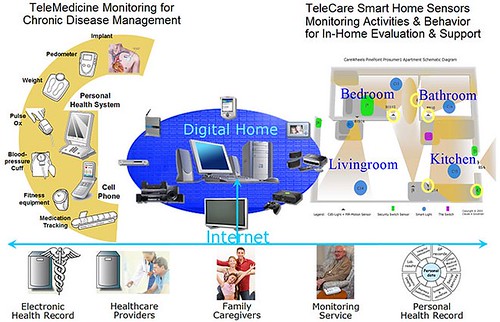
Thinking back to CareWheels and spin-offs. This was to be a home monitoring service whereby elders, seniors, I'd add unsupervised teens and children, any age really, with caveats (not infants), would stay in their homes but send off lots of signals just by moving around and doing stuff. It's not about spycams which no one has time to look at or space to store.
It's about medical cabinet open close, bathtub use, shower on/off etc.
Ron Braithwaite could tell you how Machine Learning informs a human staffed set of dashboards (humans working from home also, they monitor each other), with dispatch teams at the ready for both scheduled and unscheduled home visits.
Like if the pill dispenser isn't activated within a time frame, or the bathtub gets turned on but not off... or a stove burner. IoT. Protocol might be to call first, contact a signed up neighbor if no response, only escalating as makes sense.
You don't dispatch a team at the drop of a hat. Patients at especially high risk for some medical condition will presumably have sensors for that, e.g. blood pressure or whatever. It's up to you and your doctor what level of monitoring is indicated. Some people opt out of some options.
Machine Learning has only gotten better since this infrastructure was first envisioned.
Ron Braithwaite:
Yeah, CareWheels was a fantastic idea. In fact, it was one of the driving reasons why we were going to move to Canada.
Honeywell owned (owns) a bunch of patents in this area, which they have never done anything with (TTBOMK), so we thought we would make it happen in Vancouver, BC with the help of a couple of non-profits.
The basic idea was to use machine learning (https://en.wikipedia.org/wiki/Bayesian_statistics) to determine when things usually happened and how long they would take, using simple sensors all over the place, wiring up an elder’s home to allow them to age in place.
I worked out a deal with Canada’s largest non-profits working with elders and another working with those who were disabled to provide a computer and modem on each end, targeting those who were primarily house-bound both as clients and as care providers.
When our machine learning algorithms detected something unusual, they would contact the assigned care provider, who would attempt to contact the client and, failing that, then contact designated family members, and (worst case) emergency services. In addition, the care provider was tasked with making contact with each of their assigned clients every day.
Just as an aside, did you know that 90% of all calls to emergency services by elders are for socialization? People get lonely living at home, so having someone - anyone - calling them daily takes a huge load off emergency services.
At any rate, the way it worked is that each sensor for each person had a specific typical time value associated with when the sensor detected activity. If the elder typically uses the restroom for 45 minutes at 9am, but doesn’t exit the restroom after 90 minutes, somebody needs to check up on them, just to make sure they haven’t slipped in the tub and broken their hip. The Bayesian algorithm learned the pattern of each client, so we were looking for exception conditions for that specific person and avoiding the problems rule-based expert systems.
Perhaps the most heart-breaking tragedy of getting turned away by a Canadian Immigration agent (I have always assumed it was because I’m an obvious hippie, but I really don’t know) was having to call the first person I had hired as a caregiver. I had interviewed several and picked him to lead the caregiver cohort, for a variety of reasons. Not the least being that he had suffered a traumatic brain injury about 12 years previously and couldn’t get a job, even though he was not cognitively impaired. He sobbed into the phone as I told him that we were turned away and it wasn’t going to happen.
I still think it is a viable service and I would love to contribute to the project if someone else were to resurrect it.
Thanks for reminding me of this, Kirby. This was fun to dredge up old memories of tilting at windmills.
The roofer guy, who came here to give me an estimate on the Owens Corning system solution, said I'd first need to get the west side walnut tree cut back. My upbringing in the subtropics leaves me somewhat too comfortable with the advance of nature vis-a-vis these temporary human abodes. I've been thinking about Logan's Run, the later scenes, when they're out of the bubble, in the former capital.
In the meantime, I'm still thinking Asylum City as a code term for Campus, which is just as well a Base. Depending on how we want to shade things, or colorize them, we have these different lingos. The Vortex and Woodstock festivals, Oregon's Country Faire, the failed Rajneesh Puram experiment, all feed into my alchemical cauldron when I cook up visions of schooling options in eastern Oregon.
Your actual campus might be somewhere remote. You would learn to operate a windmill and solar panel powered campus, with various backup fuels, new kinds of batteries. Attaining self sufficiency to some high degree is one of the challenges, but this isn't Biosphere 2.
There's no attempt, in these experiments, to somehow dome over the entire community, even if domes do feature, as theaters and planetariums perhaps. Or as greenhouses. Gymnasiums. How were these structures delivered? Do we want to experiment with Bucky's vision, and use helicopters quite a bit? How about dirigibles? Is the campus served by blimp?
I'm doing a lot more on Facebook than I used to, whereas I've throttled back on making Youtubes a whole lot. That's a stash in inventory ready for service if and when.
I'm eager to keep that "3rd culture" meme going, not my invention, as there is some camaraderie among international school students that transcends "culture of origin".
I tend to recreate such microcosms, or seek them out, when left to my own devices, hence all the AFSC work. We "3rd culture" folks tend to feed, or feed on, a kind of loneliness that goes with Lonely Planet (the sense of tourist at large, like a National Geographic veteran).
Speaking of global awareness, I'm still enjoying radio.garden the website app. There've been chapters wherein it stopped working, but at the moment it's blaring away in my ear. I'll get my OPB this way. Since I stopped driving as much during Covid, I'm not getting those hits off my radio.
Or am I on KBOO at the moment? Playing Blackbird by The Beatles, instrumental only.
I'll note when I hear call letters (station self identification). The app lets you point to dots on a globe, then snarfs the feed (assuming the station streams) via tcp/ip.
Domestic adventure: Carol was in the car already when I realized I'd locked my keys inside. The ladder helped, but don't try it, as probably not in the way you think.
Also: the snake got out again, but I found him.
Oh wait, I think this might be Portland Classical. Yeah, All Classical FM. Listening through optical fiber, playing on the Asus Windows tablet, the current Blender machine. I'm blown away by what people can do with Blender.
Once you get to garb and/or language it's looking more and more like ethnicity. Italians aren't a race on the check box forms, but there's still citizenship and/or heritage.
The computer game experience of designing one's avatar helps kids appreciate the Mr. Potato Head aspects of genomic expression. Permute at will.
We have lots of ways to draw Venn Diagrams, based on a variety of attributes. Midgets could be a race (regardless of skin tone) if we wanted, but we don't want. That's why they say "race is a social construct" because "we" keep changing our minds about what "we" care about. You can't say Latino is a race in recent census forms.
The so-called "races" come and go. In Bible school, they link races to sons of Noah. Those diagrams keep changing as well. Making "Jews" be a race was a project with far more subscribers until recently.
Do people think all native Americans, from Eskimos in the north to descendents of the Incas around Peru, form a single race? Not usually, as that wouldn't be convenient. That would turn too many Mexicans into Indians and we can't have that.
BTW, sickle cell anemia is also endemic around Greece and people of light skin tone (POLST) are afflicted.
Given the time of year, some of us on Facebook were checking out stories from that time, in Beijing, China.
One thing I'm acutely aware of is my "brain TV" and its ability to dramatize situations I never witnessed. Television is good at taking over this process, providing guided meditations, often synchronized to a narrator, but not necessarily.
My imagination has an ability to "flit" so when I picture that cliche scene, say of Nero fiddling while Rome burns, I get away with a pretty low budget rendering.
Nero doesn't have to look like anyone in particular. Why invest a lot on a cliche? That's a waste of brain power.
However, if I'm cast in the role of movie director, with a reputation to uphold, then I don't want to take a cliche like "the Tiananmen Square Massacre" and spend gobs of time and energy on some poor slob fantasy version. I should get trusted accounts from eye witnesses, film footage, stills.
Today, with lots of camphones, assembling more accurate mental summaries is in theory possible, provided a public so equipped. Cameras have a role to play in verifying weapons agreements just as surely.
My attitude towards mass surveillance is share the view with the masses. I'd like to ogle at Picadilly Circus or Times Square as much as the next guy. What's the harm? Let us watch. ODOT, our department of transportation, shares those freeway cams.
Fiction is the time-honored best way to let oneself off the hook. If you want license to imagine and project, unfettered by facts, choose fiction.
However, lets not focus exclusively on unpleasant or unhappy memories. The ability to fill in or render, when necessary, is what the imagination is all about.
We may develop our skills, as a TV and film critic, questioning a director's choices, and yet never critique our own onboard programming systems.
Do you believe everything you see projected, in front of your own mind's eye?
Still in Plato's cave are we?
In my quest to self improve, I'll turn a critical eye on my own imagination, letting my editorializing eye know that it itself is being supervised.
The old game, of observing the observer, like a dog chasing its own tail, actually yields positive results if engaged in with gusto and a healthy attitude. A system is more likely to register improvements when under sincere scrutiny.
You might have thought I'd be a Blender user well before now. 3D Graphics is expensive, in terms of hardware and I haven't had the budget, is part of it. I do single frame (still) renderings and run those together. Blender does the same thing. I was using POV-Ray (povray.org).
Anyway, our paths crossed (Blender's and mine) in June of 2020 and I immediately fleshed out School of Tomorrow (a repo on Github for one thing) to include Blender, as both a front and back end.
The Russians were expecting the election of Hillary Clinton—and preparing to immediately declare it a fraud. The embassy in Washington had attempted to persuade American officials to allow its functionaries to act as observers in polling places. A Twitter campaign alleging voting irregularities was queued. Russian diplomats were ready to publicly denounce the results as illegitimate.
This story makes it sound like The Atlantic has special knowledge of what was to be official Russian policy. I've seen no evidence for this claim whatsoever, which seems like a brand new conspiracy theory, impossible to prove false. It just seems very very unlikely.
The implication is that Putin and the Kremlin (per "Russian diplomats") were planning to officially reject the outcome, were Hillary to win, pulling something like a "Juan Guaidó is the true prez of Venezuela".
I don't believe Putin / Kremlin / Officialdom in Russia planned anything that seriously dumb. They expected Hillary to win by a landslide or at least to win (says The Atlantic).
That their plan was to take to the world stage announcing they didn't accept the verdict of the American people would have been a laughable mistake. Russians aren't that nuts.
The whole Guccifer story put together by Crowdstrike also deserves skepticism (which I've lavished on the story in my U2oob channel).
The author cites no sources for this conspiracy theory linking official diplomats to some queued Twitter campaign that never materialized.
Here's another unsubstantiated gem:
For their part, the IRA’s minions immodestly credited themselves with having tilted the trajectory of history. The U.S. government obtained an email from an IRA employee describing the scene at the St. Petersburg office on Election Night: “When around 8 a.m. the most important result of our work arrived, we uncorked a tiny bottle of champagne … took one gulp each and looked into each other’s eyes … We uttered almost in unison: ‘We made America great.’
Why should I believe this stuff? What email where from whom, obtained how?
My frequency of posting has dropped somewhat, ditto Youtubes, but then for years I didn't do any Youtubes. After a spike in productivity, lasting over a year in that genre, I'm not insisting a uniform distribution here on out.
Carol turns 91 tomorrow and is here in Portland riding out the Covid Storm. Whatever that means. You had to be there, right?
By "test piloting" in the title I mean with respect to various curriculum segments, which I try out. My privilege has been continued access to a range of age levels, from say middle school, occasionally younger, up to adult.
The curriculum segments I test are disproportionately weighted towards communicating a brand of American Transcendentalism I favor, a kind of culturally literate philosophy that takes in fascination with phi and pi, and a lot more besides.
I'm speaking of the "Bucky stuff" of course, which could be used as a broad umbrella, getting out there to circus tent dimensions. In other words, I'm not trying to limit myself unnecessarily. I'm still getting my feet wet in a lot of swimming holes where others have swimmed (swum?) for years.
More recently, I've been revisiting the ubiquitous-on-Twitter (and elsewhere) World of Data Science. What Bayesian World have we accessed, wherein all this kind of stuff is the case? What is the likelihood of the world I inhabit. Be that as it may, it appears that I do, but perhaps my problem is overly fixed beliefs? Am I insensitive to continuing revelations? These are the questions a data science is always posing, to both self and others.
What is the likelihood that the Concentric Hierarchy as I call it, should be dismissed as irrelevant, as noise? I'm not saying that happened. On the contrary, the great thinking of great thinkers has continued to make an impression in our shared civilizational template. I'm in pass the torch mode, working to save (salvage) what I'm able to save.
Given that I have a kind of platform, and take that seriously, I continue doing homework a lot, piecing it together. I'm always looking to other faculty and students for feedback in this cybernetic, global university I sometimes nickname the Global U. Before that, I envisioned myself working for the Global Data Corporation. I wanted some kind of tribal jurisdiction for it.
My Heuristics for Teachers on Wikieducator shows how I'd partitioned a generalist curriculum using the compass directions of future versus past, logistics versus risk assessment, given each of them quirky names: Martian, Neolithic, Supermarket and Casino respectively, with the suffix Math for each one. Casino Math was the math of probability, confidence, assurity and so on, per this particular partitioning of course. I embedded it in the Silicon Forest somewhere, with geocaching (treasure maps).
All of which is to say, I've made something of a career out of testing curricula, and I'm fine sharing that with my latest testees, as we know this is the common process, whereby we all update one another.
I was sure I'd scrabbled together some Birmingham pix, from when Alexia and I visited Tara, could couldn't find them in any album, hard as I looked, so I made a new one today.
I'm embedding sans Flash widget, my usual, as Flash is being phased out. Changing all my slideshows will be a long process, if I ever get to it.
I drove my mother, almost 91, to and from her INR appointment. That's where they check your blood and adjust your dosage. I'm on a blood thinner too.
Portland is in the early stages of facing down the Covid-19 thing meaning St. Patrick's Day is mostly canceled. I'm having a Terminal Gravity IPA.
As I was sharing with Carol on the way home, Dawn Wicca my wife passed away on this day some thirteen years ago, in 2007. I like to think she'd be happy about her family, her two daughters, and myself. How is Tom doing these days?
Beyond happiness though, is working through our cosmic destiny in various ways.
Eve and I are chatting about Koyaanisqatsi (and the Simpsons parody thereof) and King Arthur by email. She's in a locked down area of California. Daughter of Karl Menger, wife of the late George Hammond, both blog characters.
Keeping social distance is the new courtesy, the expected politeness. But they should be calling it physical distance, as in this age of social media, social distance means something else.
In the meantime, I'm continuing to work on what I'd consider positive memetic material, healthy messenger sequencing. When genetic material goes viral, that's often bad news. Memes are both easier to spread, and easier to counter. That's why they say our evolution is more mental than physical these days, and meme based more than gene based.