Monday, January 29, 2024

Teacher to Teacher (T2T)

P1360053

I noticed yesterday (First Day) that Multnomah Friends, the Adult Religious Education Committee in particular, has instituted a new practice of pairing any visiting minister, with a local anchor, a peer.

In the example I witnessed, a visiting minister from another group came by to express a leading, one might say to do some market research, some field testing. Quakers encounter "leadings" as in promptings from God (superuser, root) and feel a need to respond in some way.

The visiting minister, let's call him Bob, has a background in journalism and knows the power of words. The exercise he proposed was to have participants randomly pick a card, but not turn it over to see the word printed on the face until cued to do so.  There's more to it than that of course.

In cahoots with Bob, one might put it, was our local minister, a Friend already embedded within our Multnomah Meeting and familiar with its ways. Lets call her Alice.

What if Bob were way out there, in terms of expectations? The concept of "outside minister" might extend to become ecumenical to the point where our visitor is quite exotic in the context of Stark Street. The anchoring minister, Alice, might then play an active role in achieving some equilibrium, to the point of pushing back (figuratively under normal circumstances).

Think of an invited teacher, such as myself, prattling on about triangular and tetrahedral numbers to a math class. Their regular classroom teacher would most likely be the Alice. 

Alice knows her students and provides me with guidance and direction, both beforehand, during, and perhaps in postmortem, regarding how I'm likely to get a best reception, given we're all hoping for good value, and what modifications I might make before next time (hypothetically).

In this particular case, our Alice was not required to intervene so much as dovetail with the flow, because our visiting minister was an old hand in our midst, a former clerk of the meeting. He heads up a satellite worship group these days, but could hardly be considered exotic.

Speaking of Stark Street, I remember one night standing in the middle of it, next to this same Bob (then clerk) and gazing up into a darkened tree next to the meetinghouse. A would be mayor of Portland had climbed it in protest. The police and fire departments had their equipment on the scene and were trying to talk him down.

The card game consisted of 30 "Quaker words" (such as truth, light, silence, integrity...) such that (30)(31)/2 = 496 pairings were possible (a triangular number). The impromptu interest groups would pair randomly chosen words to extract new meaning, a "gift" one might put it, to share with the whole group later. The name of this exercise: Between Words [as I'm reminded by a postmortem email from Bob].

Neither Bob nor Alice participated in the exercise; they were "overseers" (a term present day Quakers tend to shy away from). The market research angle was to offer Bob some feedback on how to maybe fine tune the exercise. Example feedback: many card games let us put a card back in exchange for a different one; might we incorporate such a step?

Given Bob and Alice, you might be asking about Eve, the theoretical 3rd party in any communication, and potentially able to disruptively penetrate a private channel between Bob and Alice. Here I might say that Bob and Alice have a common investment in keeping their channel secure and protected from disrupting factors, such as environmental noise.

The Biblically minded may find it distasteful that cryptography makes Eve be the bad guy again, as if she hadn't already suffered enough since the talking snake chapter. Think of Eve as a pun on "eavesdropper" and lets give her the power to listen in and not be disruptive at all i.e. she too is supportive of Bob and Alice, who may not realize she's even there.

Another innovation of the Adult Religious Education Committee, as a preamble to the exercise, was to talk about the importance of language, including language preservation, especially native languages such as that of the Multnomah people, for whom the meeting was named. This theme resonated with what I'd been learning through the Tulalip Cultural Center during my recent north circuit car trip.


Saturday, January 27, 2024

Curriculum Norms

USPO

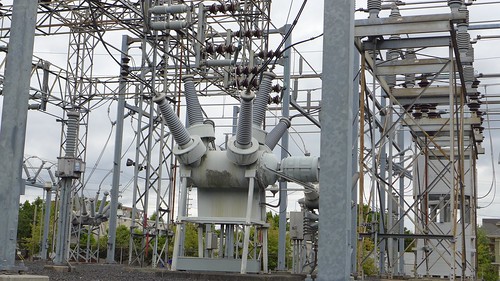
If you're at all aware of the syllabus we're using here (School of Tomorrow), then you know we're interested in electrical grids and power plants, as well as in off grid village communities that supply their own power locally. This focus inherits from a "lense adjustment" some call World Game, wherein we're "brainwashed" (deprogrammed) to see the whole earth as a single campus, versus a set of fenced in areas in some grave battle for world domination.

Consequent to said viewpoint is our awareness of an emerging set of local networks increasingly interconnected by high voltage lines (HVDC). We don't stop at pipelines, or shipping lanes, when it comes to studying energy networks. We look at grids. Even when discouraged from doing so by misinformation campaigns.

Where do we find teenagers getting schooling similar to ours? Sometimes through the Speech and Debate subculture. Past teams have taken up whether the GENI agenda makes sense: eventually hooking the east and west hemispheres in a power sharing scheme, a global grid. We already know of some Chinese companies expressing an interest in this idea, given engineering projects they've already taken on. The plans have been in circulation for decades by this time.

However, the better way to pass the torch on these topics to a next generation is through the internet more generally. We start in middle school with the Fuller Projection and the controversies surrounding projections in general, a politically charged topic. We start in STEM with ball packing exercises and the short computer programs that serve as sequence generators. Whole earth visualization starts with a Jupyter environment in many cases, has we're pulling in data sets, and displaying them geographically.

By high school, we're used to the idea that RBF was one of the great American pragmatists, also a realist. I'm not saying that's a high school you remember, or have in your neighborhood. The normative standards I'm promulgating, as a principal, probably seem exclusionary if you're in a corporate run state school in North America. You may think my international school focus is elitist and inappropriate per the standards of your community. That wouldn't surprise me one bit.

Grid Tech

Wednesday, January 24, 2024

Tetrahedron Year

The Attic: Main Building
:: visiting The Attic ::

The current year, 2024, is a Tetrahedron Year.  We won't be having another one until 2300. 

By "tetrahedron year" I mean any year with a tetrahedral number. These latter go: 1, 4, 10... 2024 (I skipped a few). Tetrahedral numbers get spaced further and further apart, as what separates them are consecutive triangular numbers: 3, 6, 10, 15... A tetrahedron of 22 layers is what we're talking about.


Ed Pegg posting to Mathematical Tiling and Tessellation on Facebook

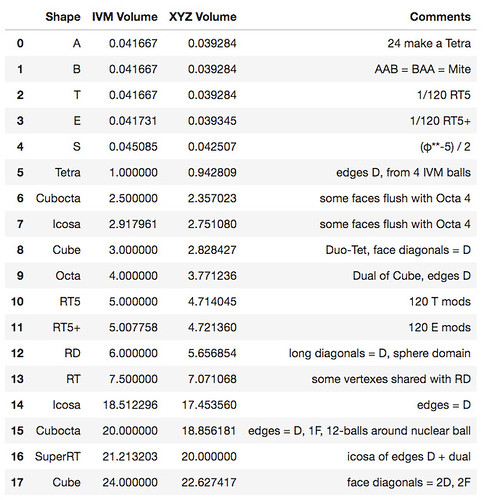
I was thinking, going in, that I had a head full of novel ideas they'd not heard of at The Attic. On the contrary, the faculty is well versed in the latest trends e.g. they're already using Jupyter Notebooks. Have they tuned in the concentric hierarchy and all its whole number volumes yet I wonder?

Master Volumes Table

This was a quick visit while Sydney waited in the car. I was glad to finally see the place, having heard about it for so long. I was reminded of Sunshine Elite Education in Bethany Village, likewise ahead of the curve.

Here's the curriculum I put together (a Github repo) during my teaching time at SEE. I make use of Jupyter Notebooks, sometimes with sympy, just like The Attic does. 

I've taught Python in other ways too (e.g. for Coding with Kids). I'm not recommending a diet of Notebooks only, when working towards mastering Python.

Which reminds me, this just in from Terry Bristol:

I've used VPython a lot over the years!  I learned about it through Arthur Siegal at first, and then through AAPT. "3D programming for ordinary mortals" is their slogan. That's me!

Sunday, January 14, 2024

Refugee Programming

A big question we’ll be asking is “did you show them cartoons?”. I’m talking about the refugee kids, new to the Americas in many cases, or maybe just new to the northerners and their ways. They’ve probably heard of Loony Tunes and thought maybe that’s what they’d be getting.

That’d be kinda like being an Iraqi kid and thinking Uncle Bush was gonna bring Sea World from Florida. Don’t tell me “no theme parks were planned” as I just wouldn’t believe that about my country. We’re like Disney bots. 

Maybe that’s why I think of Mickey Mouse when I think of the “evacuate Gaza” project. We’re talking about the volunteers. Some choose to stay and fight, much like in the case of the Ukrainians, the Syrians, and so on. I’m imagining a flotilla of cruise ships showing toons and documentaries, opening doors in a global university that was never confined to west Asia. Go back when they’ve rebuilt your campus. They teach us.

Seriously, refugees (students and professoriate) are not going to disappear, as peoples falling through the cracks of the nation state system (only so many jigsaw puzzle pieces work as one). I’ve been suggesting the religions and the universities provide a next layer (safety net), and they have been doing that to some degree, and not because motivated by my suggestions. My suggestions are more for me, a nobody, notes to self, about how I need to keep perhaps anonymously busy. I have some experiences to draw upon. I’m another player.

When I call us “Disney bots” I’m not being supercritical or mean, and yes I know about the crisis in believability, the incredulity, which has surrounded Epcot in many dimensions. The corporate sector was apparently never serious about the future, witness hyper-loop, witness colonies on Mars, condemning us to retro lifestyles centered around dead end science fiction. We feel our own useless obsolescence, and that’s not pleasant necessarily — a kind of metaphysical arthritis, a stiffening. They’ll say we were time wasters, i.e. out of sync with Mother Nature.

Yes, I’m talking about dealing with the mass migrations of human beings that have not abated, by land, sea and nowadays air. The idea that we’re all settling down and staying put might be a comforting myth in some craniums, but we can’t organize human affairs around security blanket fantasies. People seek to counter tyranny, pestilence and wars, and we know from the anthropology manuals that “fight or flight” remain the conventional options. Flight is still one of them. Fleeing is another way to countervail.

The Friends, known as Quakers in the vernacular, have always recommended finding ways to root out the root causes of outward wars, focusing more at the psyops level, seeking to resolve and dissolve more than further polarize and mindlessly escalate. 

Sometimes it helps to have the kids draw, or make cartoons, as a kind of working-through, as a therapy. One might blog for the same reason: to process (cite Process Work). We also show them cartoons made by others, their peers. We let them know this world still bullies and abuses humans, and that we’re working on it, and that we could use their help. 

Am I talking about some kind of government brainwashing then? I’m talking about leaving favorable impressions from first encounters. Americans greeting Americans. We get off on the right foot. This isn’t about “fighting Indians” or anything so misguidedly juvenile.

Friday, January 12, 2024

Looking Back

My view is Donald Trump won the 2016 election fair and square, without any significant help from the Russian spy services. The discovery of the Epstein network and a sudden groundswell of interest in pedophelia as a topic, had a lot to do with millennials coming of age and assembling a picture of the world. No, sixteen year olds did not vote in 2016, but their concerns were shared by many older and younger people as well.

So am I saying Pizzagate tipped the election? I find that more probable than any story involving Moscow, concocted by the losing political camp. "Pizzagate" is simply code for an existential distrust of the privileged ruling class on the part of youngsters, of the outgoing Boomers especially. 

Hostility to the crime family aspects of being in power was a function of increasing financial literacy and a less Victorian, post Freudian attitude towards repressing stories involving pedophelia. Consider how much has trickled out regarding the Epstein network since 2016.

Those seeking a more healing rhetoric, seeking to unify a divided body politic, would probably do well to acknowledge Trump's 2016 victory, even as they continue to emphasize his loss in 2020. That someone as controversial as Trump would only survive four years in office is hardly surprising. His handling of the global pandemic scared a lot of people. 

Also, because of the pandemic and all the focus on holding an election regardless, the bureaucrats in charge of running elections had an interest in keeping it transparent. The plan to unearth all kinds of irregularities backfired big time, as we experienced less corruption than usual given the freakish circumstances of needing to implement vote by mail etc. That's my read on 2020: this time Trump lost, also fairly and squarely. In neither case did the Russians play a critical role, but in both cases the DC-based intelligence community (IC) certainly did.

My recollection of the Reagan years was the lid blew off on much of the secret behind the scenes shenanigans perpetrated by said IC. People began to tune in that layer in the bureaucracy as a political actor starting especially in the wake of 911. The way 911 got spun into an attack on Iraq upped that intergenerational distrust that would later boil over in 2016. 

Wednesday, January 10, 2024

School of Tomorrow: Orientation 2024


As I say in the video, I do work to keep focused on the problems, such as how to care for ourselves amidst some kinds of plenty, yet with scarcity too. Abundance doesn't mean an endless, affordable supply of everything. It means relative abundance, compared to benchmarks. 

Computers equipped with GUIs (graphic interfaces) are relatively abundant, as they were non-existent not so long ago. Now every smartphone is such a device. We might call them smartphones but they're computers, with telecommunications, GPS and all the rest of it. These were not a feature of my teen to young adult years. Nowadays, iOS and Android among the most run operating systems.

I've been thinking of a type of city, perhaps based on a military base conversion, keeping the runway and warehouses, that specializes in routing humans but also helping them get sorted. The assumption is that disasters remain inevitable and helping humans flee deleterious circumstances will be an ongoing need.

Until now, we've seen a lot of emphasis on tent cities, refugee camps, that get stuck in a narrative where no one really gets resettled. What were conceived of as temporary facilities become semi-permanent. The cities I'm imagining, based around port facilities, air and/or sea, or even road and railways, form a network of high turnover centers, more like universities.

Universities function as pipelines with respect to their students, with another class of administors, lab technicians, janitors and so on, who may have a career that extends well beyond that of a typical student. And then of course we have faculty. How do these tiers map to a network for handling refugees and what qualifications does one need to go through intake?

As soon as the infrastructure is in place to work on resettlement, the risk is around getting swamped. Many families would like to escape their current circumstances. Any institution which encourages immigration and emigration, even perhaps all inside a nation's lines, may have disruptive effects at the community level, as now more people have more of a choice as to whether to stay put or not.

Sunday, January 07, 2024

Gravity's Rainbow

View

Synergetics looks at "lagging media" (previous post) through the lens of the Doppler Effect. RBF has passages about events happening all over, but our news of them is coming in somewhat out of order relative to some more absolute calendar timeline. 

The way history shows things panned out is not necessarily the order in which any one particular person received news of them at the time, i.e. the so-called objective viewpoint obtained by history is not one inhabited by any contemporaneous human.

In the est Training they told a story about some old couple out in front of the trailer, perhaps a luxury travel trailer or a destination model, with a missile already launched in their direction. Subjectively, they're oblivious, enjoying an adult beverage, and yet it's already certain, by the laws of probability, that they're gonna be hit. 

It's a troubling picture, designed to remind us of our own obliviousness. Worse than the tree falling, with no one to hear it, is the one that hit by surprise.  

I'm reminded of a giant walnut tree falling behind me in my neighbor's property and not hitting my or anyone's dwelling (could have been so much worse); I watched the action reflected in my computer screen.

The bitcoin algorithm faces the same issue: how to develop a trusted verifiable narrative or sequence of what follows what, without needing any objective viewpoint for a human being. Accomplish the objective by means of cryptography. We call it the blockchain.

Solution: many blocks chronicle what happened, in terms of transactions, each of them possible continuations of existing threads in previous blocks. Think of ferries set to cross the river, which one gets to go next?  It looks somewhat random. 

How do we pick a bitcoin block at random? Pick one that wins a little 10 minute mathematics contest requiring brute force approaches, and reward (in bitcoin) the more muscular processors. These would be the bitminers, those who strive and also drive the blockchain forward by expending brute energy.

There's a kind of particle physics analogy wherein we chain Feynman diagrams together regarding what actually happened, imagining a benignly simple particle zoo of expected transformations, Tao of Physics style. 

One doesn't actually need a specific cast of deterministic players to show off partially overlapping scenario processing. The atomic objects might be entirely software creations. 

We might be watching a game of chess. The rules of chess constrain transitions from state to state. The rules include winning as an objective, providing a probability gradient into which strong players have deeper insight (we might say “by definition”).

Around my rain forest region (Cascadia) the controlled flood of water is such that excess capacity remains, which grid management doesn't mind trading for paying clients i.e. it's still often affordable to bitmine in regions with cheap power, as long as bitcoin itself remains worth harvesting.

Again, the point here is we're looking at a generalized Doppler Effect, wherein broadcast sources are coming and going, changing frequency, leading any given "me" to really have to puzzle through a lot of accounts, many storylines, to gain sufficient perspective or overview.

How much overview is enough? You tell me. I'm not in the business of gratuitously imposing upper limits. "Let's find out" is a better answer.

Wednesday, January 03, 2024

Lagging Media

Happy New Year
:: happy new year ::

Let's say media are by definition lagging, yet there's still "relative lagging" as in further and further behind.

We feel it in math class sometimes: some critical bridge was crossed and you're still on the same side apparently, left behind. Then the rest of the lesson makes no sense and so on. Are there ways to catch up? Not always.

People drop math in droves, and if they don't, the learning curves get exponential, as in straight up. The principle of least action says we do what we can i.e. we minimize the difference from our potential. And yet we still experience gratuitous kineticism sometimes. We overshoot, overbuild, otherwise make life harder than need be. "Why so?" we wonder.

The media don't want to lose us. To have an audience, a news show needs to carve out an audience, and find a way to thrive off this following, most usually by selling advertising to businesses likewise craving a filtered audience. We see the dynamic multiplied a thousand fold (shorthand for a million) thanks to YouTube and such services.

Connecting these two themes: a storyline is a computation, in the sense of one needing to follow the logic, track the characters, get their motivations and so on; we might not be able to follow. How this works out in practice is producers will see where things might be going, and start to work on the story deltas. The deltas, the shifts, the attitude adjustments, might result in a smoother landing, on the next established plateau.

We all know events are moving quickly these days. We're in a rapids. The audience is as usual hoping for guidance and many take queues from professional politicians. We also have those certified (oft self certified) public thinkers, influencers, who manage to win a following on social media. Networking occurs, as guests host one another.

Some of us take naturally to a social milieu, ducks to water, as if born for this time. Others fit in more awkwardly at best, at least at first, and need to work on getting the hang of whatever. The very same person frequently ends up in both camps, as an expert over here, a beginner over there, and places in between in the middle.

When you get to grow in directions you're used to growing in, we might call that eigen-growth, just to sound pseudo-scientific about it. These are the lucky ones, But again, one is "in one's element" only sometimes, running one's preferred racket. Other times, you're a rat in someone else's maze. A smart rat perhaps (lots of potential), but not native.

Tuesday, January 02, 2024

Knowledge Graphs

Screen Shot 2024-01-02 at 7.06.21 PM

Dr. Steve Mastin is well-known in some circles for his exquisitely detailed presentations on gems and minerals. Right now, I'm awaiting to join a Zoom meetup regarding garnet. We might be having some technical glitches.

Speaking of technical glitches, I've got so far got one corroborative post regarding an outage on Github: the pictures I've embedded, mostly imported from Flickr so as not to overburden the Github server, are now failing to be rendered by Github's own Jupyter Notebook server, which only has to display said Notebooks, not make them interactive (that's more colab's job, or Binder's).

Still no hint from Steve... OK, I've just seen his message: he's waiting for the host to start the meeting too.

I've been taking in some Hegel today, over YouTube. I've been going over some of these grooves on Math4Wisdom recently as well, and on my own YouTube channel. 

By "these grooves" I mean the conversations connecting philosophers, such as Hegel to Kant and Nietzsche to Hegel. We call these "knowledge graphs", mainly dots with arrows, but the arrows may come with additional attributes such as "was critical of", "was a fan of", "is a disciple of" and so on.

In my own YouTubes, I'll maybe show pictures of philosophers and others and not bother with arrows, with the nature of the relationships being a part of my narrative. I talk about Nietzsche being an admirer of Emerson, but later in time. The overall timeline remains important. Where does Napoleon fit in? How about Ada Lovelace and Margaret Fuller? Sam Hill? These have all been prominent in my stories, as I rounded out 2023.

The host messaged Steve asking where he was. A confusing situation. Glitches happen. Links break.

During the Rose Bowl yesterday, at the sports bar, this random guy joined our table and started giving us a lecture on arcane units of distance, such as the chain (66 feet) and the link (1/10 of a chain). Quoting Wikipedia: "The chain (abbreviated ch) is a unit of length equal to 66 feet (22 yards), used in both the US customary and Imperial unit systems. It is subdivided into 100 links. There are 10 chains in a furlong, and 80 chains in one statute mile."

What all this had to do with counting cards I wasn't sure, but he wanted us to know he was good with numbers in various ways. I brought up phi (after a discussion of pi) which he hadn't heard of.

Sunday, December 24, 2023

Xmas Eve 2023

Mellow Mushroom Interior

This morning, some kind of water main burst, blocks away, unleashing a torrent. Danny had to step over or through the rushing curbside rivulet to bring in the groceries, delivered by a cutely painted Kroger van. I later headed out to take some pictures but streets were blocked with yellow tape. The water was stopped not long after, once the utility vehicles arrived.

Whenever I travel, my habit is to notice the franchises, the brands. We have Kroger in Portland, but in the guise of Fred Meyer. We also have Chick-fil-A, but not on seemingly every other block like here in Atlanta. I haven't seen any White Castles. Mellow Mushroom, a pizza place, was pretty fun, as was Fire Maker, the microbrewery.

Tara and I went to the Center for Puppetry Arts a few days ago, where I pushed her around in a wheelchair. I'm a big Jim Henson fan and this museum devotes several rooms to his Muppets. Another room reminds us of the whole history of puppets and of the fact that they're not just for children, cartoons either, as Walt Disney well knew.

In contrast to my cozy scene with family, I'm glued to my social media. For decades, I was pretty devoted to CBS as a source of news and even sent letters to its writers, suggesting various no doubt bizarre-to-them storylines. I've always been engaged with world events, and don't consider myself that unusual in this regard. These days, I live in my echo chamber of self selected most-watched Rumble and YouTube channels, which slowly evolves.

Wanderers had their traditional Winter Solstice Celebration at the Linus Pauling House on Hawthorne, back in Asylum District, my home neighborhood. Some friends who were present sent me a few pictures and posted others to Facebook. Social media also keeps me patched in to my peeps. 

Wandering the streets of midtown Atlanta on a misty day, I connected with friends around the world, sharing somewhat blurry phone pix (blurry because of a chipped plastic lens cover).

Fire Maker Microbrewery

Monday, December 18, 2023

Design Science

Once something complicated and new becomes more of a known quantity, then it gets distilled into an icon planners use in a next iteration. For example, a fulfillment center. Slide the icon onto a grid, with the accompanying fleets of delivery vehicles.

Catalyzed by the global pandemic, many have migrated to a new lifestyle involving working from home and getting most supplies delivered. In complementary fashion, many have migrated to delivering for a living. A given individual may go back and forth between staying home a lot, versus keeping the products and people moving.

Remote work tends to be cloud based, where the cloud consists of office work, now virtualized. Replacing the current workforce (an ongoing challenge) means grooming a next generation of people comfortable using cloud services to create infrastructure.

It’s not like construction jobs are going away. What we build is changing though. Designing for remote workers means integrating work / study with sleeping and eating. How is this done? Tech companies generally have a cafeteria and recreation spaces, even gyms, but because of zoning, they’re not also residential. The mixed use building is moving into the foreground, where instead of driving your car to work, you take an elevator. Or you simply stay put.

A lot of work requires special facilities, such as factories, body maintenance shops (clothes, nails and hair, dentistry, tanning and massage, gyms, general healthcare). When many companies co-locate, you have the makings of a village or a city. This is what we see today.

We should not neglect the institutions involved in metaphysical disciplines, including the ideological ones that require the killing of other humans. Humans seem to have mostly resigned themselves to the fact that mass murder is necessary, to keep their living standards high. A few countering ideologies promote the idea that we’re capable, as a species, of largely ending our dysfunctional and pathological ways.

These countering ideologies are sometimes stereotyped as Luddite and/or back to the land, as if the best way to end the butchering of humans by other humans was to “opt out” of a mainstream lifestyle. However, some schools of thought embrace combinations of technology and metaphysics as potentially capable and effective enough to obviate the need for WMDs. They emphasize reshaping, more than violently disrupting, a pre-existing set of lifestyles.

When I talk about the metaphysical disciplines, what do I mean? Religions? Cults? Philosophies? I mean all of the above. Humans are not finished creating these. “The best religions are yet to come” might sound sacrilegious, but on the other hand, it might sound like a promise from God, prompting a kind of hallelujah response. Amen.

Thursday, December 14, 2023

All Nighter

Geek Culture

I'm pulling an all nighter, which doesn't mean I avoid tiny naps. I'm wide awake right now, and it's only an hour before the dog's breakfast anyway. She's nudging my elbow. 

I have my reasons for burning the idiomatic midnight oil (although not so idiomatic in my case as the heating system in this house is literally burning oil, day and night). Given differences in time zones, it's not such an obscure time (4 am-ish) elsewhere in my reality.

One could fill one's later years with study of what one just went through, over most of a lifetime. I'm speaking not just of a personal timeline of foreground activities, but a shared background marked by public events.

I think we tend to do that anyway, those of us of grandparent age. Nor do those of younger age necessarily fail to reflect and look back either. 

Along those lines I've been sampling several new media analysis channels, going with generations younger than Boomer (my cohort, roughly speaking), each engaged in retrospective summations in some dimension. It's by looking back that we see trends. We may sense what's trending going forward, but as the blockchain teaches, not everyone's block is the one added.

"Boomer" refers to "baby boomers" i.e. a bulge in the US population occasioned by a period of prosperity and relative peace, post two World Wars. As a boomer, I was starting to tune in world affairs, from television and adult conversation, during my early years in Portland (having been born in Chicago). Airlifting supplies to West Berlin was a thing. I preferred cartoons. I'd get more into reading later.

The geek in me sees all these internet video channels engaged in serious processing, both on and off cable, on broadcast television and radio. We're computing, as quickly as we dare. Cutting corners may be dangerous.

Marshall McLuhan saw the tsunami of TV and wondered if the printed word would survive, or rather, those who could really relate to it. The convergence of TV and text in the form of computers was just starting to happen in McLuhan's day. The senses would rebalance and remix.

We were seeing a quick evolution of hypertext media (http, https), a new form of tension in the world, but also old hat, as scholarship had always been about making these kinds of connections. 

Computers made it all go much faster, the better to keep up with the CERN stuff. 

Dr. Vannevar Bush of the National Science Foundation, was seeing search engines in the 1940s.

Saturday, December 09, 2023

Oscillations

Today's chatter on the FSI and TrimTab calls was useful to me. 

I did a lot of Show & Tell, with the Snelson sculpture (Barrel Tower), with Flextegrity (floating icosahedrons) and with a Vector Flexor.

On TrimTab we were asking: "What is dynamic equilibrium?" We were reading Ideas and Integrities.

The animation that came up for me was the gentle swaying of the Jitterbug as it oscillates to and fro through cosmic zero, hitting a turnaround at each extreme, an icosahedron.

An icosa-what? 

A core animation in this metaphysics is a mathematically explored geometric transformation that causes many an onlooker to roll their eyes, because Bucky's disciples seem to inevitably produce it at random times, to make some point or other.

Bow-tie Universe is like a dorji, somewhat dumbbell shaped, marking an "eye of the needle" inflection point where the camel turns inside out, if it could. Extremes of asymmetric aberration pull against one another, as left versus right, as positive versus negative. 

We get that meme with the meditator, inside his vector equilibrium frame, open minded, receiving. I've reproduced one of the best of those above, by Casey House of Syn-U.

The twist-contract terminus might appear to be an icosahedron superficially, whereas we're able to envision a doubling (of edges) and quadrupling (6 x 4) in the octahedron then tetrahedron that define "the gate of plunge-through" at a deeper level. 

Picture a tyger leaping through a hoop (cosmic zero), landing on one side, then the other. 

Add a beat: 4 - 0 - 4; 0 = 9 (nine is none).

Brain --> Mind --> Brain --> Mind... "Brain" connotes electronic bot-like reflexing, the latest twist, 31 great circles, icosahedron. 

"Mind" connotes openness if only for an instant (a glimpse), an equilibrium of 25 great circles.

Tuesday, December 05, 2023

Keyword Searches

Going viral...

Some may wonder to what extent all this focus on and interest in UAPs (UFOs a subset) is impacting our spreading Martian Math curriculum, within our Silicon Forest context. 

The focus on legit Mars explorations, anchored from Earth, were already a deliberate tie-in, i.e. during class at Reed College campus, we would watch YouTubes of the Mars landers, taking into account their findings. The science-to-fiction ratio was meant to be bully for science i.e. > 1.

But then remember, around a scientific core, we weave science fiction, consciously simulating, or simply exercising our powers of imagination for both didactic and recreational purposes. We play fantasy-based games sure, but look how hard those make us think, as game developers. 

We stay buff with matrix algebra and everything, even quaternions in some game engines. We’re flirting with universal algebra (UA, Grassmann) even as we project those Pokémon.

The relationship is precessional. Journalists are not generally interested in the Math Wars per se, and only a tiny clique of debaters keep those alive. 

Adopting Drug War nomenclature, we have the various math curriculum pushers and enablers, who stand to benefit from large armies of addicts. Calculus’s Invisible Army is an especially big one, participating in the four year college racket. 

As Andrew Hacker describes in his controversial book The Math Myth: And Other STEM Delusions, high school and college calculus play a serious gatekeeping role when it comes to entering some professions.

I’ve been a trooper and later officer in the Calculus Invisible Army myself, slightly on the fringe maybe, but that’s not necessarily a disadvantage in a market that tolerates, even encourages, some diversity.

Martian Math is fringe in its emphasis on computer programming (versus only calculators), object oriented in particular (setting up functional as a sister paradigm), tying types and objects to instances of polyhedra

We might have the coordinates for the Archimedeans all pre-stored in some exercises, with the student’s job being to write the SQL to extract them, one at a time, from a relational database. We’ve had all this in place for a couple decades by now, while continuing to field test, reflect, and improve. Once a polyhedron is extracted, many parameters remain (play with em or accept the defaults) before composing a scene and rendering it e.g. in Blender or POV-Ray.

So it’s pretty likely that a journalist searching for “Martian” or “flying saucer” is eventually going to stumble upon one of our storyboards, involving hidden government facilities in contact with ETs. We use frameworks like that to couch our teachings about AC and DC electricity i.e. the Earthlings and Martians are collaborating on hydropower dams, using slightly different maths (reconciled within the curriculum).

So do I get a lot of inquiries from journalists asking if I’m a source regarding the UFOs people are talking about in WDC? Not really. It’s pretty obvious from the context that I’m more the high school level math teacher, networking with academics and administrators at various levels to usher in a more fluid form of mathematics teaching, more literary in many dimensions. 

We may use a lot of the same tropes in our storytelling, but unless you hear them say “tetrahedron” rather more frequently than average, they’re likely from a different subculture. Look for other signs. Our Silicon Forest stuff has many differentiating characteristics. Private schools have more freedom to prototype.

But the assumption should not be that journalists are confused, or need to ask me much of anything. They bump into Martian Math online, and realize it’s something tangential, and then go on to pursue their UAPs down a different rabbit hole. 

The net effect is increasing awareness of Martian Math, even if there’s a ships passing in the night aspect to the encounter. Maybe a more junior journalist, looking for something to write about, will return to the Math Wars scene and seek to pry out a cogent story. Start with Sputnik?

Sunday, December 03, 2023

Napoleon (movie review)

Cutting and pasting my thoughts to a friend in Cyprus...

Good morning. I’ll say something good about the movie: just screenshots of the film, an album of stills, each surrounded by a fancy frame, would have its place in an art museum.

For example the coronation scene. It looked like a tableau by a Dutch painter or something, almost too staged to be real (in that shot, we got a brief glance at a court painter, making this same point).

Of course it is too staged to be real. It ends up being cinematic and archetypal, at which point it feels free to dive into some new Freudian vista that doesn’t echo any historical accounts already on file.

It’s all about Josephine and his own mother. People who study this period don’t like this kind of “fooling around” as if what’s being told is the accepted wisdom.

Once one suspends disbeliefs and enters speculation mode, then the story hangs together by a different glue. He abruptly returns from Egypt, or escapes Elba, for the same reason: he wants a word with his wife. Hah hah.

You could say he’s an early feminist, wanting to hold up his end of the bargain as he sees it, with corresponding counter-demands. He esteems her highly to the end and in the fade out, her disembodied voice suggests they try it again in a next life, and maybe get the balance right this time.

I can’t help but see this telling as one in contrast to King Henry VIII and how he treated women who couldn’t bear him a son. Napoleon takes a more scientific approach (for the day), seeing if the problem might be him, and even when it turns out to be not, he wants the divorce so he can legally marry and have a legitimate heir, but without wanting to punish his wife. She’s to be treated very well, and he still wants to be her best friend. 

In a way, it’s quite a touching story as told, and I don’t find it to be anti-French. He’s not just some brute from Corsica. He has a deep sense of chivalry.

Wednesday, November 29, 2023

Animation Transformations (Musings)

This animation turns talk balloons (like in a comic book) into sketches of complex molecules, on the theory that language is a chemical transaction, mediated through neurons to and from the musculoskeletal systems in communication. Ants do something similar.

We ("we" -- not me necessarily) say the meanings trigger additional processing and that the chemical sensation of hearing or reading language is not akin to reading or hearing music, in that “music is a dead end” in terms of making all those wheels turn, the ones that language turns. We call this “mental imagery” and music often has that too.

Certainly after listening intently to a human language, something flips to where it’s no longer necessary to do a simultaneous translation, to / from a native language. We could say this happens when another language is no longer “hosted” but is able to run on “bare metal” but we don’t. When we think about brains we’re not that focused on metals.

Where metal gets into our thinking sometimes is through “trains of thought” i.e. in comparing thoughts to a succession of train cars, we’re bringing not only the trains themselves, but rails into the picture. That’s a metallic vista for sure. We could take those comic thought balloons and go from words, to chemical diagrams, to chugging trains going by. All the associations of a train whistle… some are more mesmerized than others.

In telling the history of psychoanalysis, it’s important to not forget the buildup through public interest in both hypnosis and animal magnetism. Electromagnetism was being heralded by some (Thomas Edison included) as the outward manifestation of our thoughts, quite possibly persistent after the death of a body. Looking back though, we see language gearing up for the internet, whereby alchemical diffusion could be (a) more pinpoint switched and (b) global.

Broadcast TV does not lend itself to pinpoint switching such that targeted information needs to travel more by phone and mail. Once video content became super easy to source and share, the comic talk balloons started filling with video communications, a phenomenon remarked upon often by Marshall McLuhan, as he sensed the ripple effects would be enormous.

Monday, November 27, 2023

Killers of the Flower Moon (movie review)

This was my first time in Academy Theater in the Montavilla neighborhood, on the other side of Mt. Tabor, the neighborhood volcano. I’m getting a Wes Anderson vibe from our miniature world here. Dave DiNucci and Leslie Hickcox joined me.

I went in with few preconceptions.  Having since seen some of the negative reviews, I think you just need to be in the mood for one of those serious-minded downers. Also, I think the lead actress was perfect. That’s exactly the kind of understated low-key behavior I find believable in such a woman. She was a good dramatic foil to the more whup it up Leonardo DiCaprio character.

I’m writing this review several weeks later. What impressions stuck? 

The DiCaprio character was a divided mind. On the one hand, he was motivated by money, he’d be the first to tell you. On the other hand, he was in love with his wife, to a threshold she could bear and make reciprocal. But the money motive overruled at the end of the day. He was close to blind to his own predicament, so conflicted he had become.

Weeks later, last night in fact, I saw the newest Hunger Games, the prequel. In my mind, they formed a double feature, as here was another deeply conflicted male who more consciously brought it all together in the end, in a Darth Vadery speech paying tribute to the Will to Power.

I found it most interesting that diabetes was the real killer in this picture, which the money hungry males could aide and abet. Appetites must be balanced against what a body is able to digest and make healthy use of. 

Some appetites become addictions, in the absence of adequate defenses (e.g. insulin), leading to the slow (or fast) undermining of a whole culture. The appetite for oil money was no less destructive in many cases.

Sunday, November 26, 2023

What Is Technology?

Screen Shot 2023-11-09 at 10.47.22 AM

I whipped through a Neil deGrasse Tyson interview recently, on YouTube, while walking Sydney (using iPhone + AirPods) wherein he affirmed the meaning of technology as "that which is made by humans". 

That got me thinking of course, as I've usually heard "technology means tool use" which has different nuances.

For example, we've all seen monkeys digging ants out of anthills using sticks as tools, so is there no technology use in this picture (other than taking the picture)?  Per Tyson, a beehive can't be "technology" even though bees construct it, because "constructed" is insufficient (forget bird nests, anthills, mole tunnel networks). We need "constructed by humans" to make it stick.

The issue here though is humans never start from scratch when making stuff. They depend on stuff already made, including their own brain-transporting musculo-skeletons. 

Nature provides all the ingredients, including the smarts built in to the human design, and then mixing these ingredients into dough, pounding it and baking it makes it "made by me" the baker technologist. You need that designer mind, with the intent to invent, thereby netting new workflows (algorithms, recipes).

Might we instead revector "technology" into "high" and "low" without being so specific regarding which species or cellular processing is involved?  Is the meaning of "technology" so set in stone that we're unable to create a new namespace?

The tendency to fuse "techne" with "physis" arises when we discount the "noun view" relative the "verb view" of stuff.

If "stuff" is a "process" (a flow, a scenario through time), then nature is always "doing" and "making". We now know that even rocks aren't "just sitting there" doing nothing. They consist of crystal lattices and chemical happenings, even when no free reflecting light is present. All matter (stuff) is "on fire" in the sense of being energetic (vibrational) at heart.

The human brain-transporting musculo-skeleton registers as "high tech" whereas picks and shovels (used by naturally occurring humans) register as "low tech". Humans are characterized by their ability to approach, comprehend, co-invent, work with even high technology. They have that Promethean power.

Friday, November 24, 2023

Postmortem

I haven't actually lived in WDC (that's Washington, DC for nonlocals) for a long time, and even then, my chapters there were sporadic and short-lived. 

I lived in a finished attic, cram-packed with spy and detective books, that time I worked for Americans for Civic Participation (a nonprofit voter registration outfit). Another time, my parents were housesitting a place near DuPont circle, below ground-level as I recall. 

Speaking of which, Ed Applewhite introduced me to the Cosmos Club, on said circle, on a different visit. A bigger and older version of Wanderers in a lot of ways.

All of which is to say, I wasn't there when the decision was made to provoke Russia into actions egregious and punishable enough to justify the sudden imposition of sanctions up to and including an internet cut-off. So it's speculation on my part, mixed with some remote sensing (based on open sources), when I say the WDC political cast was taken by surprise when no switch got flipped such that all the lights went out in their foe economy. Russia Today (RT) remained accessible to those not dependent on cable.

Russia experienced disruption and inconvenience yet continues to have internet.

The missing puzzle piece, I'll offer, is: 

  • the free open source Linux revolution, starting in the 1980s, 
  • bringing us the graphical web by the 1990s (with memex vibes from earlier science fiction), 
  • and leading to e-commerce changing social dynamics big time (shopping, dating) in the early 2000s. 

Software engineers learned that copyleft collaboration left "every company for itself" strategies in the dust, in terms of advancing the state of the art. Competitors could add some secret sauce and hide proprietary layers inside cloud containers, but the value added was atop publicly scrutable designs.

Making the fundamentals of tcp/ip secret, as in classified, would have defeated the whole purpose: to make a decentralized system that could withstand enemy attacks. That was arpanet (sticking to lowercase unix style).

As a consequence, those with less than a high school education, by today's standards, with respect to cyberspace, continued to think of "the internet" as some uniquely American (as in US) technology that could suddenly be withheld from others with the flip of a switch.  

Let's imagine a TV show wherein a West Winger shouts "do it" through a bat phone to some anonymous corps of engineers in the Pentagon, but then nothing much happens, because there's nothing much to do really, in response to such orders. 

Of course the banks have older games and could just repossess bank accounts. The lawlessness of the "rules based order" would feed a growing counterweight, a bulking up BRICS.

I'm not saying the internet couldn't be physically hampered. However the vote-winning hand was supposed to be a domineering control of cyberspace without the powers of explosives, not an edge in conventional force or special operations savvy. 

Just throw that imaginary switch. Do that thing with the routers. 

Once the sanctions proved ineffective, much to West Winger surprise, the game became more conventionally military -- but not really, and "because internet" again. 

Eyeballs could gain access to the frontlines over coffee from any office. What used to be hard-to-obtain humint, moving sluggishly through the system, was now "open pipe plentiful" both as raw intel and cogent analysis. Propaganda met with counterintelligence at every turn.

So-called secrets would come out immediately, meaning they really had no chance to become hidden in the first place. The engineering cult of open source had transformed the vista, even when it came to waging a more conventional, less asymmetric war.

If my analysis is correct, then perhaps we're on the right track on YouTube, in providing higher education to those most in need, such as those WDC congresspeople and agency staffs.

Seeing how the global economy has swiftly integrated, and proved resilient, it's time to build in more anti-fragility. Fragile egos, suffering from imposter syndrome, need to stay away from hard hat construction sites in the energy department. Whoever blew up Nord Stream is too juvenile to have a place at the grownups' table.

Science is not about pandering to nationalism at every turn. The idea that the sciences have to wall themselves in and compartmentalize "because nations" has always seemed semi-ludicrous, given how the science cults (e.g. the Pythagoreans) long predate the United Nations. 

The melodramas and game shows staged by the political cast constitute so much fluffy daytime TV for the least informed, from the standpoint of more snobby genres.

At another level (intertwined), you have a US military that was willing to go along with a "communism bad, capitalism good" ideology, but was unwilling to shift gears to an "our mafia versus their mafia" ideology once communism caved. 

If it was just "our conglomerates versus their conglomerates" then it's more like a mercenary Europe, with gangs of thugs selling their services to some highest bidder, some Machiavellian.

Putting a lot of weight on rotting trestle timbers is a great way to lose a train. 

Many in high leadership never lost that sense of detente and rapprochement that followed the reunification of the two Germanys. The Americans and Russians had been allies, with Russia taking the brunt, and the reason both felt safe to let the Germanys fuse was a sense of overcoming their own differences. 

But not everyone got the memo, and out of sheer reflex and unthinking momentum, Russophobia persisted even when so-called communism had become harmless.

We have the old Smedley Butler screed War is a Racket, his shot across the bow of a business class thinking to heist (hijack) the US government (see Business Plot). 

Humans need high ideals to die for, and if it's gonna be like Coke versus Pepsi, then the heroics ain't really there anymore. Interest in serving will wane, and civilians will forget why it's OK for a world military cast to prey upon them, forcing servitude (enslavement), compliance at gunpoint. 

How are we "defending democracy" by allowing bought politicians to sell us out to highest bidders?

The American people are getting narratives from respected military figures with no special animosity towards Russians. Various ethnic groups continue grinding their axes, but their specific beefs have a way of sounding parochial, especially outside of Old Europe. 

It's probably not fair to say that Ukrainians have burrowed more deeply into the molehill than Russians. Russian settlers date way back, including here in Cascadia for example. 

Our ethnic Russians and Ukrainians get along with Estonians and Lithuanians (they share news and stores), just as our Vietnamese, Chinese, Japanese and Laotians are not at each others' throats. 

AFSC's Portland branch was involved in diffusing Hispanic-Asian tensions. A melting pot can get hot, but it's not likely to boil over if democratically managed.

In sum... 

The WDCers who masterminded the war on Russia didn't understand the global internet. Once it was no longer about communists under every bed, in every closet, many career military minds disengaged. Dot commie engineers weren't the same species, and their warez clearly underpinned the workings of today's capitalism. So why war against them? Pythonistas were not the enemy.

Friday, November 17, 2023

Virtual Nationhood

A sense of how to start a Diaspora State online comes from business law with its supranational (globally dispersed) corporation, not that other structures, say nonprofits, aren't also supranational. 

Say on leaving Gaza (uninhabitable at this time) a guest (a Global U person) receives a choice of nationalities, including Palestinian, but with a separate set of choices regarding where to go next.  We know Egypt and Jordan have said they're not offering vacancies, however let's expect some vacancies elsewhere.

Per this journal, a science fiction story got rolling wherein Cubans, friends of Palestinians, likewise embargoed (BDS hits everybody it seems), are offering some Cuban slots and the documentation is done digitally. Head shot in a booth, printable record, memory stick, database, and you're on a plane from Gaza to Cuba (via Malta? I don't know). 

This would be a tiny pilot study, and no, this isn't a torture taxi to Gitmo. There's no need for any overt US involvement. Cuba does have some olive groves. That some Palestinians were showing up around Cuba would not be kept secret. This would be positive PR, a story of helping families escape a hell hole.

The process of documenting with a Palestinian flag icon, for those choosing it, is not a United Nations thing, but a datum in a database thing. We have all the national flags, or do we? Who gets a flag in Unicode? How about flags gone by? How about flags in the future? Unicode is not "full" we all know i.e. there's plenty of room for new glyphs. OK, here it is, one of the emoji. That's sufficient for Postgres or SQLite or what have you.

I believe Florida's governor declined to offer any slots or vacancies. I don't know what the other states are saying. I'm guessing they feel semi-paralyzed because any innovations around getting people evacuated from the Gaza killing fields will be labeled "human trafficking" by critics. 

When it comes to exporting human beings around the planet, there's lots of paperwork. That's what your university is endeavoring to help with, with a student visa, but there's that sensitive "town-gown" relationship to consider. What if your home country wants to draft you, what rights do you have to stay away?

The main point here is these pilot projects need not and should not be huge at first, as we have bugs to work out. The EU has gained more experience with processing and documenting those coming in illegally, although Florida has been dealing with Cubans for decades. Ever since Texas became a state, we've had tensions with the state of Mexico in the human trafficking department, along with Drug Wars.

The question is what are the next steps, once an evacuation system is established, for besieged refugees everywhere (with Gaza the showroom exhibit)? We're talking about a global underground railroad. As a Quaker, I'm just "talking the walk" meaning you'd expect stuff like this from a "human libber" i.e. someone wanting more, or wanting to better secure, liberty for humans -- and so, like a Humanist in that regard.

I've been dreaming of Asylum Cities, which are not all the same and which learn from the mistakes of others. A first objection here is: don't we already have asylum cities?  Am I dreaming of anything we don't already have? Just look at history right?

Refugees from all over the place gravitate to these various urban centers, where they often find congenial groups engaged in the same or similar struggles, sometimes in Diaspora Nation mode. New York City is a haven for many such virtual nation global subcultures. France has been a refuge for Iranians in exile. The US is home to a Chinese Diaspora as well as a Cuban Diaspora. Given the relatively open switchboard nature of domestic media, the psychological battlegrounds move to where Americans get a front row seat.

Once some small elite, enrolled in this "Escape from Gaza" program (thinking of the movie Escape from New York) -- perhaps to return there when sanity again prevails someday -- starts getting documented as Palestinian (i.e. database fields, allowing multiple citizenships and affiliations), pressure will likely build to let more people register, which could lead overnight to a Global Registry and all the paranoias that would entail.

Short of such a system, the possibility of international travel with a Diaspora Nation document (somewhat ceremonial in function) would help plug the holes in the current UN system, which seems unable to register the world's peoples for any humane form of nationality whatsoever. Too many fall through the cracks, like Tom Hanks in The Terminal -- which is why alternatives might well be arising (the Zeitgeist is creative). Too many are deprived of their human rights per the UN's own declaration of what those might be.

A Diaspora Nation might also be a Nostalgia Nation e.g. one puts an icon for Persia or Prussia on one's travel van. There's no campaign to make passports or citizen ID cards for these places. More and more students are getting a standard university World Pass by default (by 2050?), and relying on university infrastructure to maintain a basic standard, in terms of providing orientation classes and onramps to lifestyle options. 

Someday national citizenship may be an unnecessary frill for some, yet still an essential component of one's identity for others, or somewhere in between. 

One's ability to move about the planet need not depend on having a declared nationality. You have your resume, transcript, health record. Your social media help convey your ethnicity. You have joined some cradle to grave work-study program perhaps. You're a nuclear materials scientist with a specialty in medicine. 

Perhaps the nation you most identify with no longer exists within in the UN system (or never existed), but that doesn't force you to pick a different one. Databases support these additional fields.

That's the big picture of where we're maybe heading in Global U terms (its own namespace).  Global U == Spaceship Earth in this cosmography.

What we're against is forced confinement of innocent people using the ruse that they have the right to remain in place, and that no one is allowed to "force" these prisoners to freedom. That's a pretty cynical rhetoric a lot of us see through. Whatever happened to freedom of choice?

If you're all for human liberties not being interfered with, then that includes the liberty to move yourself and your loved ones out of harm's way. 

Contriving to pen the Gazans inside Gaza requires collaboration among nation states well beyond those in Mesopotamia or Eurasia. But then the nation states violate one another's sovereignty routinely, to where they're clearly only notionally sovereign. It's not a system still in need of undermining. That system sank a while back (Grunch of Giants, St. Martin's Press, 1983). We're already floating in its wake, trying to make sense of a chaotic world.

In sum, not everyone is OK with forced confinement policies and some may take it into their own hands to catalyze the emergence of a virtual Palestine with or without UN representation. The parallels with Zionism are obvious, but then "let my people go" is an age old protest. Jews are especially well positioned to understand Diaspora Nationhood, whereas Christians and Muslims have felt more secure in respective empires.

Go where though? In search of a homeland, a promised land, a place on the planet, the planet as a whole, as a last resort, although not exclusively. We co-exist. We enjoy our time as guests and explore our campus freely.