Thursday, June 16, 2016

A Flextegrity Story

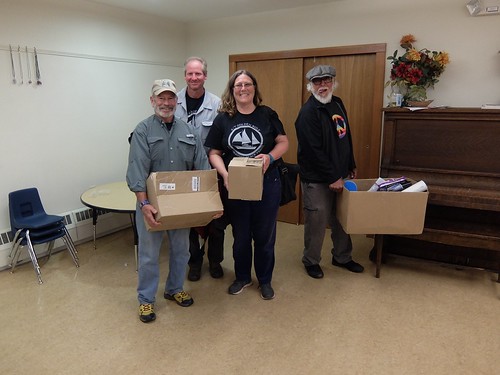
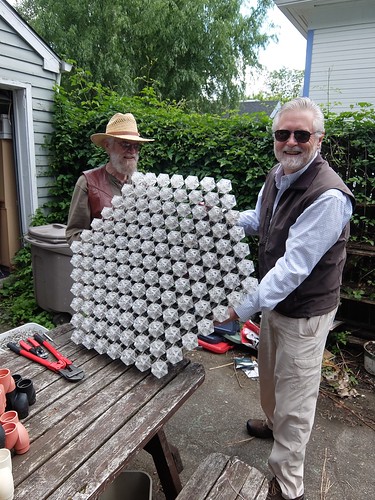
Glenn and Sam with Flextegrity Hexagon

Working with the spring-connected icosahedrons version of Flextegrity takes a real craftsman, which Glenn is, with special tools, which Glenn made, by modifying other tools.

The project:  take what had been a spiral (we called it the "e"), shown in the book, and morph it into a hexagon, for use as a table for example.  It turned out six-frequency.  The tapered base is not as regular (not a requirement).

Just after Sam left in his vehicle with the completed work, some old friends showed up, one of whom had been in the Philippines with me, in high school, when Sam would have been there too, with Bucky Fuller.

Sam knew the Applewhites from growing up in DC, and through that connection got to accompany Fuller as his sidekick and traveling companion, when invited as guests of Ferdinand and Imelda Marcos.

Imelda took them shoe shopping, with a motorcade.  She and her husband lived in a palace.  Bucky often mentioned how he'd visited with many kings and queens over the years.  They were one of those ruling couples.

As best as I've been able to piece it together, this visit occurred in 1972, but I stand ready to be corrected (I was Class of 1976 at the International School, then went to Princeton in New Jersey).

Flextegrity has much in common with tensegrity, and indeed Sam had done some sculptures in this emerging space, made famous by Kenneth Snelson who was bar none the best at it, having gotten the ball rolling at Black Mountain College, North Carolina.

Fuller was at Black Mountain contemporaneously, furiously working on his Synergetics, as it would later become known.  His first dome prototype was a failure, though Fuller was undaunted and redeemed himself the following year with a working model.  He managed to secure a patent. 

Kenneth had made tensegrity sculptures that summer, back in Pendleton, Oregon, his home town, and these excited Fuller greatly when he saw them, inspiring him to make similar works, and leading to contested paternity claims regarding who's brainchild tensegrity really was.

Some of those Black Mountain alumni came out to Oregon later, and several of them worked at Caitlin Gabel, a local private school.  I forget how that worked exactly.  I learned of this history when invited to a Thanksgiving Gathering they had at the coast every year, at Camp Westwind.

I recall joining this gathering again later with my wife Dawn and her daughter from a previous marriage, Alexia.  I don't recall if Tara ever joined us there.

Tara later got to meet with Kenneth Snelson when we took a brief trip to New York.  I had served as Kenneth's first webmaster, hosting pages at my site, in the very early days of the Web. I was BFI's first web master too.

The Catlin Gabel campus has or a had a big tensegrity made of logs and chains out near the edge of its property, visible from the adjacent St. Vincent's Hospital, where I worked as a consultant for many years.

I don't think Sam was eager to get caught up in contested waters.  In using the word Flextegrity he was branding something perhaps.  He wasn't looking to make art, so much as develop a new building strategy.

I've peppered these blogs with accounts of Sam's adventures in this regard.  Sam did get to meet with Kenneth in New York, as did my friends Julian Voss-Andreae and E.J. Applewhite.

Monday, June 13, 2016

Flying Circus

DSCF6389

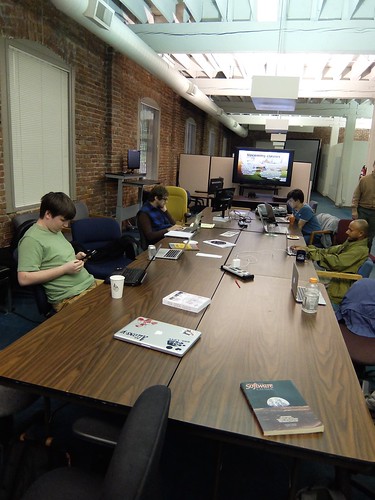
We have a varied group tonight, some brand new to Python, others more old hands.

I introduced myself as someone with a lot of experience developing applications, but more in the days of thick clients over a LAN.  Visual FoxPro.

What led me to Python was Synergetics, a new kid on the block about the time I moved from Princeton University to Jersey City.  That wasn't part of my intro, that's what I'm blogging about here, though I mentioned "3D graphics" being a driver (when in Rome...).

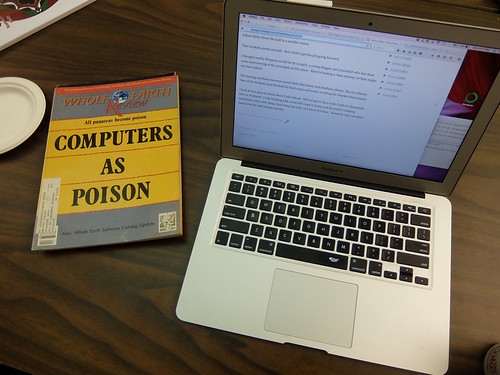
I brought some Whole Earth Reviews to share, such as the issue with the cover Computers As Poison. The personal computer revolution, pre open source, pre free, was just getting started back then, and those wanting to think ahead a bit were doing so, understandably, as big changes were afoot, as we see in retrospect.

What pulled me more into Python more specifically was actually a ray tracer available through CompuServ (remember that one?), named POV-Ray.  Finally, I had a way to generate some professional-looking graphics, right about the time we got the Web.  I was among the first with making my polyhedrons world-readable.  Python wrote the scripts that POV-Ray would then render.

Not that I got into Python right away, the moment I discovered my interest in Synergetics (consequent to Wittgenstein's thinking in some dimensions).  Python didn't exist yet, nor Visual FoxPro either.

Between Jersey City and Foxpro there'd be four generations of dBase and lots of different jobs.

There's an Introduction to Programming class firing up around now, Chris leading it.  I tried my hand at teaching that course, but without a clear briefing ahead of time about what was expected.

I went all the way back to The Turk, who beat Napoleon at chess, and who was believed by many to be an automaton, an AI bot.  The idea of "artificial intelligence" got a big boost from this illusionists' trick (a brave little man was inside).  The salons of Europe were abuzz with talk of "machine learning".

I told my eager listeners in that Intro class, laptops open, to follow along by making bookmarks.  "Google or Bing the keywords" I was saying, "such as GNU and GPL also POSIX, then go back and do more reading later, filling in".

I brought us forward from Napolean's day, through Ada Byron, then through the World Wars with secret code cracking a driving force (Turing's story), then the mainframe and personal computer revolutions, all the way up to through the Browser Wars.

Those were rough and tumble times, in the early Wild West days of the Web, what with Netscape rushing LiveScript to developers really quickly (too quickly), renaming it to JavaScript to make Sun happy, and now named ES6, going on ES2017...

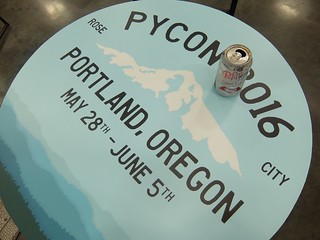
Then I rounded out our story with our famous "world domination" meme (very geeky), xkcd comics, and how now Portland is an open source world capital, with a Pycon coming over the horizon (by now behind us).

However with a boot camp looming, my focus was supposed to be more heads down getting on with using a Python REPL right away.  What's a number type?  What's a string?

Forget about "the JVM" and "dot NET" and all that virtual machine jazz.

I'd been giving the wrong talk.  The followup faculty meeting made that clear.  I got called on the carpet.

Actually, the story is more nuanced as we had some advanced students in the mix who grooved on my overview vista, so we split the class in two:  rank beginners start over fresh, seasoned veterans follow Kirby down the hall to a smaller venue.

That worked, pretty smooth.  But I didn't get the job going forward, even though my Python is pretty good.  I'm not that much of a "Djangonaut" preferring "Djangsta" anyway.

I thought maybe Margaux would be by tonight, a young blogger and journalist who has done some interviewing of the principals at this place.  Sheri is leading a class anyway, so they might not have talked.

The meetup oscillates between round table discussion and studious silence, like at a library.  One of the students just finished his boot camp and wants to debug his Heroku deployment.

I look at < guild /> as a place to think about Code School.  Will we get to do a Code Castle in Sunnyside here in Portland?  I was thinking kids could still come in buses and do indoor camping sometimes; they were doing that before my tour, so I know it's done.  However, that wouldn't have to be the only routine activity.

DSCF6388

Sunday, June 12, 2016

The Square (movie review)


Movie Madness had this on the recent acquisitions shelf, although it's now 2016 and the film takes us from roughly 2011 to 2013, through the eyes of street protestors alternately depressed and despondent and exhilarated about their apparent victories, usually short-lived, and so on (a roller coaster).  Call me late to the game if you like.

What seems remarkable about Egypt as portrayed in this film is the lack of talk radio or talk show TV, comedic and / or polemical.  I'm not saying these programs don't exist, just they're not mentioned in the documentary, which adds to the sense of low bandwidth, factions fighting without much intelligent dialog.  We see Kent State happening over and over.

Talk radio / TV is maybe not all that intelligent when one considers just a single program or channel, however when a broad spectrum is considered, along with the freedom to lurk and not talk, the ability to work through the issues, find more consensus, becomes more real.  More people get heard, even if asynchronously.  Podcasts...

Given cell phones, more call in shows would not be impossible.  Khalid's dad actually recommends the television station option, but would it have invited sincere debate from all sides?  This documentary, though overtly opinionated, does a pretty good job of that.

True, authoritarian governments by definition tend to be nervous around anything that smacks of "free speech" as that just means more content they don't control, and what's a control freak if not someone who freaks out about about perceived "out of control" situations?

Those with training in cybernetics, including economics, tend to put more faith in what we might call the planchette, or "invisible hand" -- not unrelated to a Holy Spirit or Zeitgeist, I'm sure Islam has something similar.

Feedback loops help smooth the awkward jerkiness, the spazzing out.  Ham-handed intervention by those with an overblown sense of entitlement too often simply backfires.  Angry mobs cornering a police headquarters or TV station:  what do they expect from trapped animals with weapons?  Such feigned surprise in some cases.

Jump-starting a more civil society always seems an uphill battle when those sensing some erosion in privilege are able to demonize a foreign threat.  Protestors become puppets of some alien ideology in the next round of psywar.  Keeping the battle psychological is actually half the battle (lost in this case), as physical violence only retards working with root causes and healing old wounds.

Lets remember an army of twisted Dexter types who quite enjoy their jobs as torturers, and eagerly wait in shadows, of the Egyptian Museum or wherever, for their truck- and/or train loads of human subjects.  Feeding their appetites keeps the torture taxis in business at least.  Egyptians join the rest of the world in decrying the lack of safeguards against Abu Ghraib style prisons cropping up in nations everywhere.

The protestors are pretty honest with themselves in more reflective moments, acknowledging they were poorly organized and over-limited in their access to information.  In the scramble to have national elections, no opposition party was able to self organize, a fact many blamed on the better organized Muslim Brotherhood, which had also been targeted and imprisoned under President Mubarak's brittle, zero tolerance, martial law government.

The Egyptian military gets a few voices in the mix: a security-minded general; a jovial army driver; a spokesperson for his guys.  Indeed the film itself, in giving voice to the several factions, is filling the void talk radio and/or TV shows might fill, albeit slowly, over a process of years.

I'm not discounting the Internet in harping on these older technologies as TCP / IP streams over broadcast frequencies just fine (encrypted or in the clear) i.e. the media form a networked cloud.  This movie is likely on Youtube given its content, let me go check... just the trailers.  Better for sales.

Note that I'm not saying the world is all that different outside of Misr (Egypt), a family headquarters for many years (a ninth floor apartment in Cairo).  We had our similar Occupy Portland in 2011, which led to physical violence for some, whereas most of the leadership had decided to end the experiment with the big victory party the night before.  By morning, the biggest tents were all gone.  Then the dump trucks moved in, after the arrests.

The thing about mobs is they can't often turn on a dime, much as freight trains can't stop faster than the laws of physics permit, either (no, I'm not referring to a specific legal case).  Wars are often a case of mob violence.  Once critical mass is achieved, the avalanche inevitably goes down the mountain.  There's no reasoning with it, or treating it as a subject that might in some way stop itself.

Not even the president of a superpower can stop a moving freight train single-handedly.  That's Marvel comics territory.  Warmongers know this and count on inciting mob psychology as their principal incendiary.  Spin doctors, provocateurs, false flag operators, swing in to high gear, looking for tipping points to assist their agenda.  Firefighters work to cool and extinguish the flames.

The extra "Unseen Footage" feature in special features is a retelling of the whole tale, with a lot of the same footage mixed with additional material.  I see this documentary as a valuable puzzle piece worth including in many a college-level syllabus (which doesn't mean you have to be in a college to get value from work-study programs such as I enjoy and help design in some cases).

Friday, June 10, 2016

Golden Rule

DSCF6332

The Stark Street Meetinghouse was packed for this one, an occasion to be sure.  Veterans for Peace is a sponsor of this event.  Their goal, like the Red Cross and Rotary Club, is to eliminate nuclear weapons.

We enjoyed a classic Quaker potluck beginning at 6:30 PM.  Having been in Multnomah Village today, visiting with a North Dakota based math futurist, I swung by Grand Central Bakery on the way back (on Multnomah Boulevard), getting some fresh baked goods for tonight.

Peter Ford kicked off the event using the well-known Rise Up Singing canon, page 198, A-Rovin.

Golden Rule is a watercraft.  In the 1950s it was captained by Bert Bigelow, who deliberately sailed it into international waters in protest of the aggressor's asymmetric nuclear warfare against the defenseless people living there.

Bert was a Navy man who bravely quit his commission to stand up to the mindless cowards.

The aggressor was wrapped in an American flag at the time, although this disguise would wear thin in the following decades, as corporate persons (aka "walking dead") further expressed the debilitating effects of the military-industrial meme virus (called a "complex" at the time).

Carol, my mom, gave a strong impromptu speech about the Kellogg-Briand Pact, after we sang Last Night I Had the Strangest Dream.  She pointed out the dream had come true, during a 1928 window.

Most people don't hear about this inconvenient-to-warmongers treaty, still on the books.

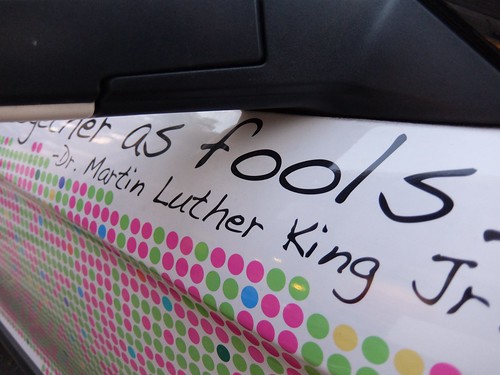
Sara, who wrote a hundred letters to Obama about ending nuclear weapons, did a lightning talk about her car, which has 17K polka dots each representing a nuclear warhead (a rough estimate of the number of WMSs (weapons of mass suicide)).

DSCF6357

Carl Thatcher gave a short presentation about first learning of the original Golden Rule. Helen gave us some overview of the voyage so far.

The crew of the Golden Rule were arrested.  Their story inspired the Phoenix to complete the journey to the Marshall Islands, ground zero for the unprovoked nuclear attacks.

The boat itself turned up in Humboldt Bay, Eureka, California in 2010.  Michael Gonzalez rescued and restored it.  She was relaunched on June 20, 2015.

Mom wrapped up the occasion with a rousing speech.  She recently traveled from LA to Seattle, and from Atlanta to Boston.  Hers was a land-based version of the Golden Rule's mission.

She's done her homework, and knows from her own research that human subject experiments were a principal goal of the Mengele types hiding out as "doctors and scientists" in the so-called US government back then.

Follow-up:  Part Two.

DSCF6363

Thursday, June 09, 2016

Ghost Church

DSCF6286

Some of you may recall when our Ministry of Education was headquartered in an abandoned high school on SE 12th, since gentrified and restored to active use.

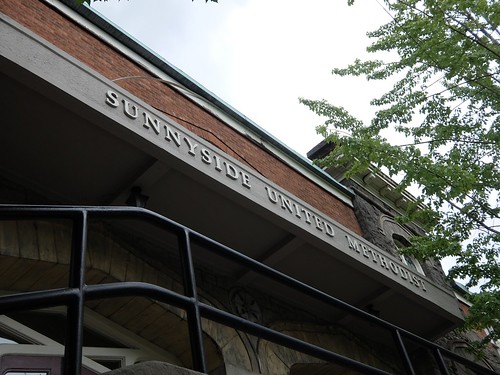
A similar property, not quite as abandoned, has attracted Ministry attention in Sunnyside, right next to the school my daughter attended, and what used to be the flagship Methodist church in the area, now largely forsaken for lack of parking.  The Southeast Examiner published news of plans to make it a community center, but no details of the plan were shared.

I sent some emails around about the Code School idea (CodeCastle?), a combination of classrooms and maker spaces, a community nonprofit.  Could we set it up with Google fiber?  What partners would go in with us?  The place needs some work.  Glenn and I had a meeting with one of the proprietors and were given a tour.

By way of background, the Ministry of Education was an OPDX project, an outgrowth of Occupy Portland, which was an experiment in setting up organelles of self government under emergency conditions, such as in detention camps in the Mesopotamia area, where warlords and armed gangs have prevailed over the unarmed civilians.  

During Occupy, I was in talent scout mode, looking for teachers, designers, engineers.  Some of the logistics I saw was impressive, such as the power plant and cooking tent.  We bargained with the city for better bathroom support (the city has that responsibility, with two public restrooms already at the OPDX site, still operational and better maintained as of this writing).

Washington High School proved the logical venue for the Love Song event, informing students about the design science ethos which informs our art colonies.  Enough people have that information by now that I'm not looking for any repeat performance.

The 4D sculpture we promulgate as signature, with all those whole number volumes, is by now free and open source, accessible to anyone within the teaching profession. The Ministry has done its job well.  The rest will be relatively easy.

A Code School needs lots of server space and a way to deploy new websites to the public.  Whether the servers are geographically situated at the school is a separate question.  In this case, the place is built like a fortress and has a Spooky Castle like atmosphere... and a labyrinth!

I'd suggest the Maker Space include work stations aimed at teaching about server racks, bar code and QR code readers, 3D printers and so on. I want to learn too; I'm not claiming to know all this stuff.  I go to Code School in student mode at least as much as in teacher mode, don't we all?

PCC is already offering a non-credit course in Bitcoin.  We'll have lots of space to experiment with crypto-currencies.  I'd think making headway on this project will be a relative no-brainer compared to the Washington High School chapter, at least in some dimensions.

Another idea, not mutually exclusive, is the "interactive museum" meme.  That's not hugely different from a Maker Space if we think of work-play stations (Montessori influence) as interactive exhibits.  Pouring fluids from polyhedron to polyhedron, per our 4D sculpture, could be one of those exhibits.  Maybe OMSI could help us with the design?

Monday, June 06, 2016

Of Math and Mythos

Cult of Athena

What some would deem mere superstition might be seen more as a code language by true believers.

Consider for example how in German language philosophy we find "Apollonian" and "Dionysian" used to typify both lifestyles and habits of thought.

English users did this too (invoked Greek dieties), with Psychology eventually lending an imprimatur of approval thanks to groundbreaking work in Vienna and Zurich.  We just needed that "collective unconscious" to store this stuff in, an approved container, known to science.

Hamlet's Mill, a work of scholarship, points out how those pointing the finger of superstition often miss the encoded astronomical information.  Once major players are seen to be star constellations, the myth becomes a mnemonic to help organize the public sky, the archetypal shared namespace.

Nietzsche, not a German national (don't confuse him with Heidegger), used such language to talk about the Zeitgeist, another good German word, which translates literally as "world spirit" or even "ghost".  He focused on pop culture, namely Wagner's operas.  He had a famous falling out with Wagner which only fueled more famous writing (he really liked Wagner's wife).

The concept of Zeitgeist is not that spooky though:  every company or team comes with a bonding chemistry that makes it a whole in its own dimension and we need ways of encoding this information.

We don't see it as "believing in" so much as "accounting for" and "hoping to predict".  OK, call it soothsaying, call it Wall Street (some floors of it), call it what you will.  If you want to look over the shoulders of some Quaker readers, maybe check out the books of Walter Wink?

Mythic tensions among the Greek deities reflected in these great discorporate battles we call "myths" are seen to this day, now encoded more in law than in storytelling.  The rules of trade are more fixed, more computerized.  Legal maneuvering has replaced the more memorable stories of mostly pre-literate / oral tradition cultures.

I've joined in such simulation gaming or modeling, using the Greek myth namespace.  Athena has a temple in Nashville that impressed me.  Following her thread back to the homeland, I came upon a friendly Python under Mount Parnassus in Delphi, and having something to do with Athena's  priestesses' oracular powers.  Delphi became the top brand in consulting firms.

Intersecting the above: the open source computer language Python and the Monty Python comedy troupe after which it was named.  Geeks-with-laptops are so much like musicians-with-guitars, and with other instruments, like we find in Nashville.  They're looking for opportunities to showcase their talents.

I played up this theme one OSCON when Gibson Guitar sent a bizmo (business bus).  Athena represents wisdom and music, not just excellence in war (she's a female counterpart of Mars in some ways).

Back to the future, wherein Greek myth is hardly an everyday language, I've been studying The Math Myth by Andrew Hacker,  and wondering how the threads would continue were Forum 206 still an active listserv.  A lot of the same memes are flying around in Hacker's wind tunnel.

I should mention, though, before dropping Greek mythos as topical, that Apollo ran that friendly Python out of Delphi in a somewhat hostile takeover that did not shut down the profitable oracle business, just put it on a more "rational" left brain basis.

Apollo might stand for AI (Artificial Intelligence) and a somewhat bot-like "We are Borg" approach that vanquished the Python ("slew the dragon" in later versions).  That our Python escaped to Nashville and re-established is an added wrinkle.  Apollo will learn to live with it I'm sure.

The Math Myth advocates lowering the voltage pressure on some circuits, especially where the steep climb over Calculus Mountain is concerned (one of my topics), starting in the foothills of algebra.

That trek has enjoyed privileged status thanks to huge amounts of hype (we learn about marketing in Supermarket Math, and Casino Math as risks are involved).  Diagramming the entire rewiring that's taking place is beyond my ability to summarize in a pithy manner, so lets skip most of that narrative for now.

How about these course titles below for both college and pre-college math courses (from mathfuture listserv).  None become exhausted in a hurry so keep spiraling through them in work / study mode.  Take them all to a new level.

Data Science and Public Policy (civics spin)
Probability and Simulations (more programming goes here)
Graphic Arts and Communications (includes the Fuller.4D sculpture)
Staying Safe in Cyberspace (computer security)


What Was

Saturday, June 04, 2016

Math Summit Revisited


Next year will be the 20th anniversary of the Oregon Math Summit of 1997.  One innovation from that summit was proposed by Keith Devlin, to better integrate the language of calculus and that of film.  That made sense to me at the time and I adopted this education reform for my Oregon Curriculum Network on-line resources.

The Lagrangian and Hamiltonian functions are both about anticipating "what's next" given information about what is moving in what direction how fast in a current frame, and assuming conservation laws, of energy of course, but momentum too.

Life coming at us in 3D, so to speak, gives more inertia values than a linear process might process, but who said we're not concurrent under the hood.  Certainly language refuses to settle down into a one dimensional meaning half the time.

You can check Youtube for lectures on these two functions, Shrodinger's too.  The concept to grasp is "phase space" meaning license to extend the metaphor, of space, to whatever.  Mathematics is poetry with special permissions and licenses that make it worth bitcoin in some cases. 

Whatever happens next, to stay within the realm of possibility, and not waste time, means staying on a surface in phase place, whereon the energy E remains constant.  In other words, keep it real.  Don't expect physics to change its mind about the rules, just for you, just for me.  Our best strategy is to use the rules to good advantage.

Notice how time as a parameter to the Lagrangian always creeps in as entirely optional, to where some mentors seem to deliberately forget about it, only to have their students put it back in (in red, but then it goes away).

How have I continued Keith Devlin's proposal?  Going with "action" in a "time tunnel", I picture film frames as framing action.  What is action?  In Newtonian units, discounting angular versus linear (say it's all angular):  mvd.  Per time slice (d/dt), that's mvd/t which is E.  E = hf, or h-bar (h/tau) or whatever.  I'm just reconciling at the unit / dimension level, not shooting for numerics.  Numerics come later. h is the unit of action attributed to Planck.

Then comes power: E/t.  Never mind how much total Energy we mean, how quickly did we spend it?  That's a delta.  "He blew through twenty million in an hour" is an assertion of some power level, for an hour attained.  Electricity generators have the same measure:  wattage, i.e. energy per time.

Think of what you mean by "rich" and the different kinds of "rich".  A busy farm may spend millions a year meaning there's high throughput, high volume.   Picture a lot of computers in a rack, mining bitcoin, using energy.  Other enterprises may just sit there and hold assets, potential energy, savings.  So we have the kinetic rich and the potential rich.  The concept of volatility enters in, as if there's nothing fluctuating, how is it measured?  Use it or lose it has meaning even in finance.

Couple "energy expense" with "bang for buck" in another dimension:  efficiency or "attainment of goals per potential burned".  Where quantum entanglement may be involved, one is in theory able to achieve more bang for the same energy, in terms of computation, exploiting features at this level.  Some people think that translates into telepathy, other spooky action at a distance.  Or would telepathy just add to the chaos?  The Internet keeps a more readable record.

We tend to tease apart Work from Energy precisely where the concept of Entropy occurs.  We need a concept of "waste", including inevitable waste.  Industrialists who want "everything for nothing" because they read about ephemeralization, need to remember no one is boss, praise Bob.

In geek lingo, a virtue is made of "staying lazy" (Subgenius:  getting slack) out of a sense that running to catch up is more likely the precursor to lame outcomes.  The concept is not the same as "doing nothing" as work is being done, just keeping it precise means attending to the local physics and actual energy conservation laws.

No one made us superheros all of a sudden. The rules of physics still rule.

Thursday, June 02, 2016

Pycon 2016 Concludes


I'm in the talk on Kivy.  Pycon 2016 is almost over, though with Sprints still to go.

I just met Dorian from Cuba, on the hallway track, thanks to our exchange on python-cuba.

During the poster session, Robin Dunn introduced me to a developer working on an educational game for the Android tablet, thanks to the X-Prize contest.

Kivy is much further along for the Android than for iOS, given that iOS tools tend to be expensive.

Peter Farrell, another math-through-coding avatar, went over to Benson High School to "stir up trouble" with his Pythonic math book.  Benson assured him they do no coding in math class (surprise surprise).

Yesterday we took in the Python and music making talk.  Pyknon will let us build MIDI files.  JythonMusic was the other one we learned about.

I had some more hallway track discussions with QuantumDoug.  He hadn't known about the SymPy Clifford Algebra module.  Will it work to elucidate the content of Chris Doran's book?

I did sign up to give a Lightning Talk on Wednesday morning, but so had a ton of other people and I was not surprised in the least to not make it to the big stage.  I'd had an opportunity already, at eduSummit, where the audience was more focused to begin with.  Let someone else get a chance.

One of the most endearing Lightning Talks was by a human from OMSI (a female) yakking about our species, the python, the snake.  Although Python the computer language was named by Guido being snarky, referencing the irreverent comedy troupe, in retrospect that proved a stroke of marketing genius.

As readers of these blogs of mine may remember, my friend and former co-worker Patrick has been developing a configurable and programmable trap for snakes, with pythons in the Everglades a primary target.  The client decides if the trap has to be lethal.

The software is designed to be discriminating in that endangered snakes might be let go (any snake in a potentially lethal trap is by definition endangered, however I meant as a category or species).

Peter Farrell and I visited with Patrick briefly last night, betwixt our post eduSummit dinner at Dawarka's, and his hopping back on Tri-Met, back to his downtown hotel on Stark Street.

My thanks to Gerard Blais of Washington DC, a data scientist, for cluing me about the Amazon Web Services party on the top floor of the swank hotel across the street from our venue.  I'd been there a couple nights before with Leticia and Henrique (very fluent Portuguese speakers), and Luciano Ramalho of Fluent Python fame.   That party met at The Commons last night, on Belmont, while Peter, Patrick and I had our little get together in Asylum District.

Sunday, May 29, 2016

EduSummit / PyCon 2016


AQR Capital and Eventbrite are sponsoring this fourth annual EduSummit, wherein educators from around the world converge to discuss strategies and initiatives around Python in education.  You may have heard of the Raspberry Pi, and Microbit devices.

The UK has been especially on the ball in getting this technology diffused.  One Laptop Per Child (OLPC) was an even more ambitious project, global in scope, wherein Python played a key role.

Nicholas Tollervey, a UK-based Pythonista mentioned edu-sig as a listserv worth jumping into.  He acknowledged me for helping keep it breathing.  S'been rather quiet lately, though with some thoughtful threads.  I've habitually posted to said listserv since its inception.

Pygame Zero is based on PyGame, GPIO, 0MQ.  The target audience is teachers looking for interesting projects for their students, based on some of the most affordable devices available.  One of its jobs is to provide relevant error messages, so that students experience more helpful feedback.

What sort of Manifesto might wrap this up, give a nice summary statement?  Nicholas and others are brainstorming on the question.  I have my own rant.

The teachers coming to Pycon UK are those tasked with teaching "computer stuff" -- as distinct from mathematics -- much like in the US.  Physical Education teachers, business application teachers, want to know what to do with the Microbit.

The US has no institution like the BBC, with a long history of giving out computers.  The BBC has a Royal Charter, is not a for-profit private company per se.  The charter says the BBC should educate, not just entertain and inform.

My impression is the UK is pulling ahead of the US, thanks to the US not having its act together.

MicroPython is Python 3.x for micro-controllers, including the Arm chip on the Microbit.  This solution allowed Microsoft's TouchDevelop to change their approach (TouchDevelop is one of a few ways to flash runnable bytecode to the Micobit chip).

In response to teacher demand, Nicholas and friends are developing Mu, a combination REPL + Editor (i.e. an IDE).

Tollervey's background as a musician is a big plus I'd say.  Microbit comes with a music module, that comes with canned tunes.  They'll be available for sale in the US in a month or two for about fifteen to twenty pounds.  Think of them as a stepping stone to Raspberry Pi programming as a follow-up step.

We have a lot of librarians at the Summit this year.  I wish Multnomah County had taken my job application more seriously, for Diversity Inclusion Fellow.  No interview even.  Because I'm too old? I wrote back to say I'd be happy to work with whomever they end up hiring.

Also frustrating is how Peter Farrell is being excluded because he didn't sign up in time.  We have some empty seats (there's one to my immediate right).  He's at the forefront of the "learning Python to learn math" movement.  He gave me a copy of his softcover book yesterday.

Dr. Craven spoke about his experience as a college intro to programming teacher.  He's the author of Program Arcade Games, a Python and Pygame based curriculum.  Lesson plans should evolve exactly the way software does, with lots and lots of revisions.  Improve the curriculum constantly, it's not a "dead document".  The new kind of teacher will do that.

Watch out for feature bloat.  "Taking away" (paring down) is often as effective or more effective than stuffing with content.  Internationalize.  Self publish, maybe include a Kindle version (forget the Nook).

Other advice from Dr. Craven:  Do video versions.  Take out the "ums".  Do on-screen markups of the code using a tablet.  Use a good microphone.  On-line quizzing gives the curriculum writers useful feedback.  Create lots and lots of free-standing examples.  Don't just stick to developing one super-long application.  Archive to Youtube or Vimeo.  The latter allows more of a paywall.

Skip using Youtube ads. Flipped classroom doesn't work (different from on-line classroom).  Animated code examples not worth the trouble.  PDF downloads lock you into old versions.  Dynamic revising means keeping it fresh on-line.  Use the Arcade Library based on OpenGL and Pyglet, not Pygame which is perhaps going stale?

Actually not, as the next speaker persuasively suggested that Pygame is still alive and kicking.  But does it install to a Mac?  Python using Minecraft is certainly plenty easy, including with Jupyter Notebooks as a front end.

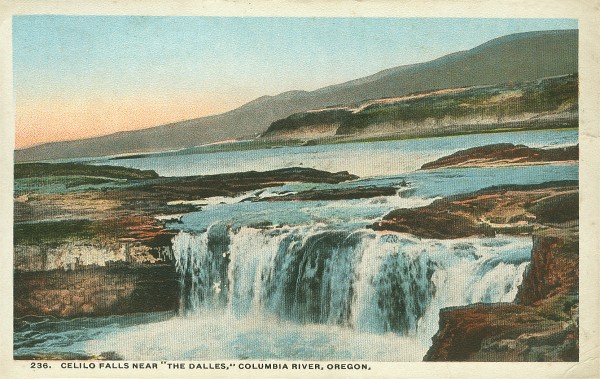
During the Lightning Talks, I talked about my Martian Math class for Saturday Academy.  This was a math class more than a programming class, but using VPython was certainly a big part of it.  I mentioned how thinking about terraforming Mars gets us thinking more about terraforming Earth, showing pictures of Celilo Falls turning the the Dalles Dam, where Google is plugged in.

Perhaps in my allotted five minutes (I used only 4.5) I failed to communicate there's a lot of published literature behind Martian Math, much of which is simply Synergetics in disguise.

Should Grok Learning really be registering an error if a student enters print("Hello World") instead of print("Hello, World").  The English are sticklers for grammar.  The missing comma strikes them as egregious.  A large percentage of students therefore initially fail to get it right.

I was up early wearing my anthropology hat, posting to MathFuture about the various brands (flavors) of mathematics that use the meme "4D".  Given my company name 4Dsolutions.net, this makes some sense.

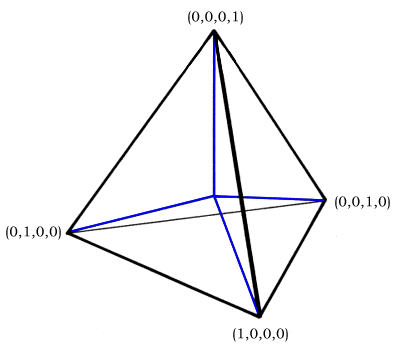
I've been teasing apart what I call "Coxeter.4D" from "Einstein.4D" using proper names to designate namespaces (per Python).  Unless we understand there's a difference in namespaces (and what a namespace is), it's bloody hard to interject yet another sense of 4D: R. Buckminster Fuller's.

Why we might want to interject the latter has to do with the positive futurism connected thereto.

Long time readers of these blogs will know I frequently cite page 119 of Regular Polytopes by H.S.M Coxeter (that's the Dover softcover edition, 1973).  I'm doing that again for Adrius (in Lithuania) and others.


Wednesday, May 25, 2016

The Blockchain and the Global U


Avatars for blockchain and related technologies sometimes focus on anonymity as the core draw, using words like "dark money" and dredging up underworld imagery, on purpose really.  "We're not criminals, we're just dodging the power-hungry who would interfere with our freedoms" is their libertarian tone.

Without raining on that parade, I want to underline what Ethereum and other programmers are pointing out:  you might program the money to reach only a Specific Individual and have it be redeemable from a specific Catalog of Things.  The transaction is both earmarked and tied to a specific party who would need to initiate the chain of events.

The concept is far from new.  It's all about the affordability of the implementation.

Micro-payment systems coupled with "auth" (identity verification) were for the longest time an oxymoron, as the overhead of tracking bazillions of micro-payments outweighs the fees for service collected.

Tracking all those details was just not practical minus serious auditable automation.  The margins were negative, not just thin.  With computers and cryptographic algorithms on the leash, all that changes.

Once digital computers were in the picture, checking and charge card systems expanded financial services to a much larger percentage of humanity, extending credit while reducing the demand for paper money.  Yet in 2016, the majority of humanity is still unbanked.

Going the next step, taking transactions to the next level, using cell phones as devices to both send an receive payments, within specific "games" or "services", is what the new crypto-currencies are all about.  The games may be made more intelligent, and more identity-dependent.

As a work / study student in the Global U, your reward for applying yourself in biology is better access to more equipment, travel opportunities connected with your research, other goodies.  People stand to gain from your work, perhaps on a cure for cancer, and so are eager to reward you with job-relevant tools.

There's social pressure to assist people in getting their jobs done, assuming these jobs redound to our collective social benefit (true, it's not always obvious that's the case).  We compensate bus drivers to have a bus service.

The problem with cold cash is not its anonymity so much as its not having any earmarked function.  In tagging the money with what it's good for, budgeting becomes more self-enforcing through the blockchain and/or other consensus-building workflows.

Work / study students get credits, good towards better access and more privileges, without needing to get cash.  The bookkeeping system sees their choices:  which microscopes they pick, what conferences they attend.  That's not surveillance or a privacy breach, that's a student creating a profile (timeline, chronofile, log, journal).

Again, in stressing how currency may be coupled with identity, I'm not applying the wrecking ball to more anonymous schemes.  The "dark money" business stays a business.  But lets not confuse programming the blockchain in a general sense with just a few of its special case applications.

Tuesday, May 24, 2016

Junkyard Nations

A lot of pundits across the spectrum indulge in the game of "I told you so" when it comes to putting the nations into some train wreck scenario and predicting some "world war N" though with little agreement on what that number N would be.

Were WW1 and WW2 two chapters in the same war?  That's what Sheikh Imran Hosein thinks, as he predicts all manner of woes.  Or was the Cold War actually WW3?  So would it be WW2 or WW4 we're going into?  What if it's entirely cyber and therefore WW0 (inside joke)?

All Syria and Russia and Israel etc. are good for in such trash talk is as radar blips on some End Times crystal ball, playing out some farce, some wimpery "end of the world".  Some Planet of the Apes goofball major fuckup.

If this is all the language of nation-states is good for these days, then I'd say it's been seriously deprecated.  No one had to lift a finger.  Entropy is a physical principle.  Obsolesce is planned, but not necessarily by humans, is another way of saying it.

However I know some UN types still use the lingo for the betterment of humanity, and not through the lens of some apocalyptic "holy book" that one is paid to be right about. These dedicated upholders of the heritage are all that keeps that tired politico-hack language from flying apart at the seams.

A lot of us though, sensing a growing ratio of junkyard crazies wallowing in the tatters of what used to be a functional language, no longer have time to learn it to a high degree.  It's more for pigs than for pearls by this time, legal fiction for the most myopic-minded.

Engineers have real work to do.  Sitting on our butts spinning out reams of End Times PR is not considered "work" on our team (more what a burn bag is for).  Let the pundits have their Youtubes, I'm all for freedom of speech.  I'll view them asynchronously if I get to them i.e. I'm not looking for front row tickets.

Friday, May 20, 2016

Garage Purge

Staged for Transfer
:: staged for transfer ::

Even as I hunt for gigs, feed my on-line fans with cool content, and monitor the political sphere, my "garage karma" still dogs me.  Lets just say there's not been room for a car in many moons.

I've been thinking of that coffee table book where different lifestyle practitioners bring all their stuff out and array it for public view.  I'm doing that, bringing out big black boulders of trash.

The process is actually more finely tuned as amidst all that trash are the treasures.  Things kept in plastic tubs fared best.  The rest tended to succumb to the relentless attention of a squirrel population.  Lots of nesting and shredding has occurred.

The triage process also involves sorting.  Good Will is getting some electronics and choice clothing, books in the pipeline.  My thanks to Glenn and Deke for helping out, and Patrick.  The local church arranges for a community dumpster once a year.  That's a target.

Tuesday, May 17, 2016

Crypto Currencies


At the code school last night, I pumped Ben for insights regarding crypto-currencies, as I've raised with NPYM Friends the possibility of accepting bitcoin in some contexts.

Ben immediately directed my attention to Ethereum, a Web 3.0 initiative.  I've been immersing myself in that subculture, mostly using YouTube for that purpose.

For those just joining us, Quakerism is a decentralized role playing denomination, a network application based in 1600s innovations within the namespace of Christianity.  Power is not concentrated in any one individual.  Management is by rotation.

The Monthly Meeting, with a monthly business meeting is the Node for this network.  That our Meetings might want to develop internal currencies is no surprise in hindsight.

Perhaps it sounds paradoxical that a practice with a reputation for encouraging honesty is so interested in systems that do not require trust except in mathematical and physical principles.

"Gaming" or "scamming" or "undermining" a blockchain or other well-designed consensus protocol is difficult to impossible in a correctly implemented system, which doesn't mean bitcoin and ether are prohibiting gamification of businesses (those are different meanings of "game").

Cheating in a malicious sense can't be done against physical laws.  Illusionists give the impression it can be.

Why I in particular am researching in this direction is two-fold:

(A) I'm the clerk of the NPYM IT Committee (Oct 1, 2015 to Sept 30, 2017)

and

(B) DWA (the bookkeeping partnership I worked with) was a trusted third party of the kind Ethereum aims to replace, as no longer necessary.

Ethereum contracts are self-policing one might say.  However the trusted third parties of my generation would do well to wrap their minds around these new consensual systems and sign off, warn against, make claims of various types and so on.  Elders get looked to for such feedback, at least in the Quaker experience.

Dawn Wicca was the professional bookkeeper, the DW in DWA, passing the torch to her apprentice (not me), whereas I was an applications developer (mostly xBase / FoxPro) and curriculum designer (lots of Python).  Nonetheless, a lot of Dawn's bookkeeping savvy rubbed off by osmosis, informing my understanding of business, the socially responsible ones especially (DWA worked for idealistic nonprofits by and large).

Good to hear from Judy Smith as I was heading towards code school, stuck at a freight train crossing.  I hope to get over to Terrebonne, Oregon one of these days, in a code school bizmo maybe, provided Oregon State has a fleet ready, or were those to be 100% private sector?

Think of crypto-currency / crypto-law as ACID-compliance on steroids?  The move to distributed databases, distributed version control, led to this concept of an immutable growing code base, signature verified using hash functions to protect against bit flipping.

These crytographer-actuaries have a lot of euphemisms for people dying and losing access to private keys that way.  Instead it's always Bob losing his private key (wallet), not an instance of Bob not taking it with him.  We could say this euphemism is justifiable as whatever the circumstances, Bob is no longer able to use his wallet.  We hope he's made arrangements for this eventuality.

Wishes Upon Death is considered Oversight business in a Monthly Meeting.  I served on that committee numerous times and always encouraged polling Friends regarding how to manage cyber-credentials.  Do you wish us to retire your Facebook account?  What sort of web presence does a Friend wish to maintain?  In many cases these wishes are handled by family, however a Meeting is generally set up to serve in place of family members when appropriate.

Monday, May 09, 2016

Immersion

Routing

I'm continuing my theme of immersion in the Heartland, somewhat like the Holy Land in that both are branded regions.  Likely many Heartlands exist, certainly many Fatherlands and Motherlands.

We joked about the swarm of mothers descending upon Galo's for Mother's Day, May 8.  Galo's is a well-managed Italian restaurant near where Highway 40 intersects I-70 in Richmond, Indiana, very close to the Ohio border.

Coming back across Illinois, I tuned in more NPR, having come the other way on mostly Country and Christian Radio, with oldie Rock & Roll on that Decatur FM station.

We're about to move some works in progress, upholstery projects, from a Mazda to a studio.  Another piece came back from the studio to the apartment where I'm staying.

I have a lot of interesting photos to upload in my camera.  I don't have enough space on the hard drive, nor spare storage devices, and might as well wait for the higher bandwidth.  Optical fiber.

Pictures will include a visit to Hastings, a center for popular culture propagation, and Best Buy, where I updated myself regarding some of the latest consumer electronics.  Some Bob Evans.  Many shots of the state of the art at Earlham College.  The graduation ceremony.  Galo's.

In Springfield
:: in Springfield, IL ::

Sunday, May 01, 2016

May First, 2016

May Day 2016

I started my day by having coffee, showering, and meandering over to Multnomah Monthly Meeting.  I purchased a drawing by a guy in front of New Seasons, camped out on the sidewalk.  Carl Abbott, a Meeting Elder, agreed it could be seen as a horse.

Trevor was turning fifty today, and had arranged for a special event at Mother Foucault's, a bookstore specializing in esoteric tomes.  He has been collaborating with a small press in Baltimore, and another local artist, to bring out another edition of a forgotten early 1900s comic strip:  The Outbursts of Everett True.

Before Trevor's talk, I caught up with Jim Heuer, a stellar programmer and one of the principals with Evos SmartTools.  Jim has featured in this blog before, as a teacher of "truckology".

He knows a lot about the LTL ("less than truckload") shipping business especially, wherein companies make bids on shipper loads, and shippers choose whom to go with.  Optimizing is a difficult problem and humans still play a role, but computers make the job easier.

Jim's software smooths the whole process of working in the LTL business by turning it into a rule-based "computer game", meaning a set of processes and workflows based in computing.

By "game" I don't meant to imply anything simulated or unreal.  We're talking about real tonnage, and paying customers who use these tools every day.  Having a coherent Ux makes the work seem more game-like.  Computers have introduced gamification to the workplace.

We met at Costello's, the travelers' cafe on East Broadway.  I'd been watching a bunch of Youtubes recently, aimed at those involved in startups.  Earlier, I'd lurked in on the Stanford course about not screwing up your startup.

Is pouring old (and valuable) wine into a new startup model (bottle) a recognized way to go?  Could a new company form around Evos and take it to scale?  I wondered aloud if PSU's Business Accelerator might have any advice along these lines.

Jim is a brilliant programmer, and shares my Visual FoxPro heritage.  He uses Microsoft components to serve the web, in cahoots with Apache, but has moved a lot of the business logic over to Python, with which he communicates via Windows COM objects.  That's a diverse and inclusive skill set.  Hacking on Jim's code could be mind-expanding for a whole team. 

A lot of his data resides in the FoxPro DBF format (inherited from dBase), but with CodeBase exposing this format directly to Python.  Now that Jim has discovered MongoDB, he sees that may be his best path forward, for speed reasons in particular.

I like talking shop with Jim because we've used a lot of the same tools, but then he's a transportation engineer and knows a ton about the trucking business, which I do not, though I've been learning.

Trevor has been studying Egoism for quite awhile by now.  That school of thought was founded by Max Stirner and later picked up in the early 1900s by a colorful cast in Chicago and their Hobo College.  One of the faculty was named Sirfesser Willkesbarre.

The publisher, Underworld Amusements from Baltimore, was present for this unveiling, as was one of the artists who helped retouch and restore the Everett True comics.  I got all three collaborators to sign my copy.

Patrick helped lead the BSA troop at the beach and is back in town.  He came over to inspect the odd pooling of water in a mysterious place, far from any obvious source of water.  I called it ectoplasm as a joke.  We actually managed to find the cause, a pin-sized hole in a water jug.

Wednesday, April 27, 2016

Wanderers 2016.4.27

Brainstorming Session

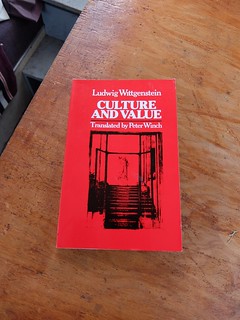
I expressed my frustration with Culture and Value to Jon Bunce.  Wittgenstein, a Vienna Circle vet, alludes in knowing tones to all these musical passages, yes by well-known composers.

It's only my ignorance that's showing through.  Nevertheless, I could use a podcast version (anyone?  Princeton?).

The podcast guides, the voices, would not need to share all of Wittgenstein's opinions, about Mahler's stuff for example.  They'd not be disciples necessarily, but would play some of these missing puzzle piece passages while trying to get at the nuances Wittgenstein was hoping to get across in referencing them.

For Wittgenstein, music had the capability, especially in the hands of some composers, to approach language in its attributes and abilities.  He used language and music as quasi-mirrors of each other, to gain deeper insights into both.

Glenn is talking about his Global Matrix as a useful summarizing tool.  Geoscope.  Macroscope.  The Christian Science folks had their Mapparium.  Yes, we're talking about a globe, which in projections gets flattened out, into a Mercator or whatever.  Glenn's matrix is a data structure.

What distinguishes the Global Matrix from the Mapparium is Glenn is really into the "hexapent" (a word he doesn't like).  Hexagonal tiling is more characteristic of certain game boards, including virtual boards like in Civilization.

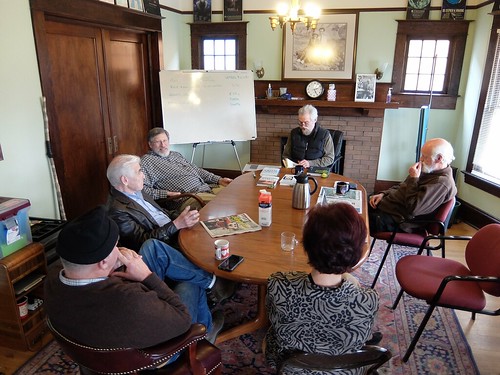
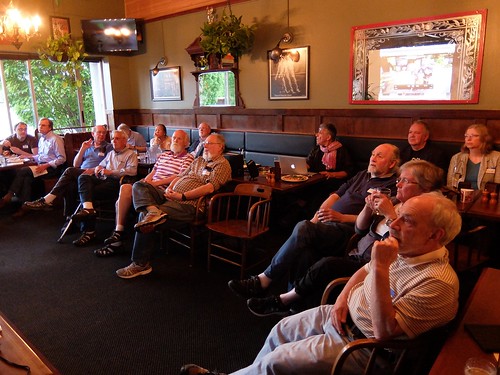
We had two newcomers this morning, who've never heard Glenn present, so he had a good opportunity to summarize.  We had some interesting discussion, focusing a lot on the Internet, but ranging to other topics.

Glenn derives a lot of his stuff from scratch, like a cook who invents many great dishes that other restaurants immediately recognize but have other names for.  He builds on his own experience, as a crypt-analyst and project manager.  The flavors he comes up with are subtly different, or even surprisingly different in some cases.  Glenn has his own cuisine.  Maybe he'll succeed where few others have dared to tread.

That reminds me, last night at the dinner party, Alice named my dessert drink, Soylent + Jack Daniels, a "kirbster".  I doubt that'll stick.  We geeks already have "headless chicken" for the Bloody Mary, an allusion to the etymology of "geek".

I expressed to Jon my concern that Wanderers might seem too intimidating from the outside.  Would-be attenders might be concerned they'd be grilled, interrogated, by judgemental know-it-alls.  But that's quite far from our ideal.

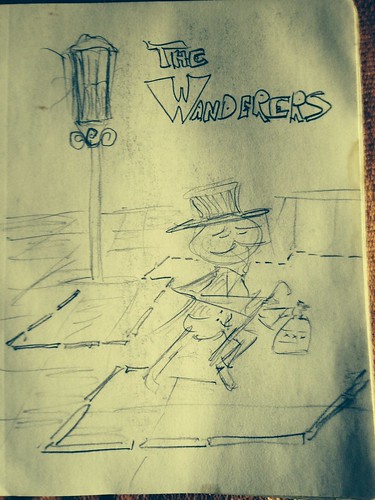
I recalled my suggested logo:  that Monopoly guy wandering on a chess board, a "random walk", with a lamp post marking its beginning, a dotted line showing his path.  Is he holding a bottle?  Is that a triple-x on the label?  He must be drunk right?  And therefore wandering.

IMG_2797

We're called Wanderers for a reason.  We don't have alcohol at our weekly meetings (we do at our Equinox and Solstice celebrations).  The wandering is more Ouija Board like at its best, recalling a Quaker meeting.  We let the spirit move the conversation.

Jon and I got to talking about David Prideaux's No Big Bang in the kitchen, reviewing some of the main memes (elevators, acceleration, gravity...).   Jon agreed that gravity affects wavelength.  Light escaping from a massive body gets redshifted.

We also agreed the Monopoly guy had a much better chance of coming back to the lamp post in a 2D matrix, rather than in a 3D matrix of XYZ cubes, or perhaps rhombic dodecahedra, if using the IVM.

Before that I was out on the porch, phoning Carol Urner (mom), presumably in transit somewhere between Cape Cod and WDC, and Patrick Barton, asking for advice.

"What's a good entry point into what we're calling 'machine learning' these days?" was the gist of my question to Patrick, and "do we have to learn R?".  I'd started reading on the topic in Safari On-Line earlier that morning.

Patrick suggested starting with a large publicly available database.  Although we talked about baseball statistics, I actually don't know if those databases are open.  I completely agree that a hallmark of that sport is its fascination with statistics.

When still with O'Reilly School, I'd suggested writing SQL-related curriculum against just such a stash, but again I have no idea to what extent this stash is available, and/or at what price.

How about a database of faces against which to run facial recognition algorithms?  We could play a game like Memory, wherein every face is twice repeated and the machine's job, after a training period, is to recognize as many pairs as at can.  Patrick suggested using mug shots of the very same baseball players (called "trading cards").

My angle on Machine Learning against Big Data is from the point of view of a code school curriculum writer / instructor, and wanting to lower a ladder to keep the topics accessible.

Where would we start with 8th graders?  I think with success stories. Voice recognition, and OCR (optical character recognition) have come a long way in my day.

"Voice recognition" does not necessarily mean recognizing "who is talking" although that could be an application (biometrics), and would be more like fingerprint or retinal pattern matching (used to authenticate and/or determine identity). This is more Buzz's area.

The customary meaning of "voice recognition" in 2016 is that the computer correctly transcribe into writing what the speaker has said.  Given advances in this area (didn't Tim Peters do work here?), people are talking into their devices a lot more, asking questions, and getting answers.

Great Stuff!

Monday, April 25, 2016

Patterns in Primes


I've been enjoying Dr. Terry Tao's enlightening patter regarding prime numbers and their statistical distribution along the number line.  Important results stretch back thousands of year's, starting with a proof credited to Euclid (as so many are) that no greatest prime number exists.

The Fundamental Theorem of Arithmetic is a next one:  all natural numbers decompose into prime factors except 1, with primes being those with precisely one factor (almost-primes have two).

Terry breaks it down for us into the multiplicative and additive branches of study.  Multiplied primes have received more attention, historically speaking.  In the additive world, we're looking for arithmetic series, and the distribution of intervals.

Do we ever run out of twinned primes, primes only two apart, like 3 and 5, 41 and 43?

As of when these Youtubes were made, we know if we keep twins, cousins, and sexies together in the set, we'll never run out (that set is infinite), but there's still no recognized proof that just twins will occur infinitely often ("i.o.") though Terry suspects that they do.

Primes do get more sparse lets remember i.e. they do tend to spread out.

What if only sexies remain, once we're out far enough i.e. some lower bound exists after which twins will no longer occur?  This result is not much expected, but at this point is hard to rule out.

Many interesting results have been obtained, including that the number of primes between n and 2n approaches n/log(n) as n increases.  That's log to the base e.

This is called the Prime Number Theorem or PNT and was known by the 1800s.

As a programming challenge, why not explore this assertion empirically?  I will make that suggestion on mathfuture, where I'm data warehousing some new curriculum ideas.

I've been developing a so-called "lambda calculus" track for 9-12 grade level topics, shades of Hermann (sp?) on sci.math, way back in the 1990s (he was a huge lambda calculus booster, by which he meant something more hard core and formal in meaning, and to which I am not opposed).

Dr. Tao knows how to continue the history of number theoretic research into primes right up to the last minute, owing to his front row seat as an active contributor to this literature.

Saturday, April 23, 2016

Seder 2016

Seder 2016

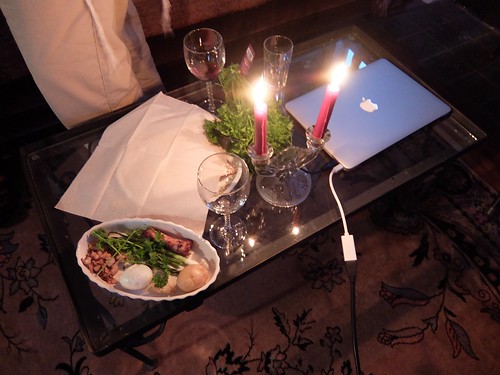
I joined the Potkin brothers for Seder on Friday, the Jewish Passover celebration, which commemorates the escape from tyranny to freedom, both thousands of years ago, as narrated in the Book of Exodus, and in a more eternal sense, every day. 

The ritual has many parts to it, involving especially prepared foods and wine.  Alan presided, in addition to having done a lot of the prep.  I'd been to Seders before, but not many.

Since Alan and his wife have both devoted their careers to curating, often digitally, a lot of Buddhist culture, especially in Southeast Asia (they lived in Laos for many years), why not turn these same skills towards restoring and sharing some aspects of Jewish culture as well?

Illustrated storytelling is at the heart of such anthropology.  Alan had some material ready for sharing on his computer, hooked to an HDTV.

Alan gave the backstory as to how he came to take his Jewish heritage more seriously, thanks to his appointment with destiny in Vietnam.

He'd been drafted out of Bard College, an intellectual Brooklyn Jew who had soured on his own Jewishness, owing to oppressive aspects of his childhood and young adulthood.

As an infantryman in the Army, he got into a firefight, with grenades and all the rest of it.  The shrapnel in his jugular, which no one knew for sure was there, but some suspected, took many hours to to fully express its presence.

His case kept moving to the bottom of the triage list as he spent the day getting shunted from facility to facility in search of a working X-ray machine.  When he finally started losing blood in earnest, he was fortunately in a place that could do something about it and his life was saved.

That's when Alan met Morton Singer, an Army chaplain looking after his fellow Jews, rather few and far between among the enlisted.

Even though Alan had "no preference" on his dog tag, Singer recognized a fellow New York Jew.  He and Alan had some serious soul-searching conversations, and to the delight of Alan's parents, Alan returned to the fold.

As it turned out, Morton's young family lived only block's away from Alan's parents.  Small world.

Later, Alan learned that his new mentor and friend had been killed in a plane crash, owing to a neglectful refueler putting in the wrong type of fuel.  The C-123 pancaked at the end of the runway, killing at least half aboard, including Captain Singer.

Alan's telling contained many more details than shared above, and Jonathan worried Alan might be going overboard with the war story.  What worked to everyone's advantage was about only half those present were Jewish, so no one really knew what to expect.

At least one other Vietnam War vet was in our party.  He later thanked Alan for sharing his story.  We all applauded the Potkin brothers for hosting this special event.

A grand time was had by all.  Passover is a celebration, not a time for mourning especially.  The invited guests were jovial and a source of interesting conversation.

The fact that the next day was Shakespeare's birthday added to the literary and multi-cultural flavor of the event.

Alan drew an analogy between the Jews and the Laotians, forced as slaves to build a certain grand canal in Bangkok by the conquering "Egyptian" Siamese.  Helping people better appreciate history was a big part of what we were up to I'd say.

Tuesday, April 19, 2016

A Wanderers Presentation

HQS

I've written about Alan Potkin before, as a gifted geek but more from the satellite photography side of the business.

Alan used to sell a poster, a satellite picture of the Bay Area from space, which helped finance his grad school days lifestyle.  He shared it in the course of his presentation.

His poster reminded me of Stewart Brand and his "why haven't we seen any pictures of the whole earth yet?" (this was before Google Earth or any of that, in the years leading up to the first Whole Earth Catalog).

Tonight's audience included at least two attenders I've never met.  They asked interesting questions and participated in the discussion of the trade-offs.  Major dams have their consequences, that's just physics, some considered beneficial.

Alan's main focus was hydro-electric projects, existing, planned, postponed, dismantled.  In Burma, Laos,  However he reviewed, in more detail than I'd heard, his role in restoring a famous Lao version of the Ramayana to the newer version of a certain temple.

Detailed photographs from the destroyed temple were projected on the walls of the new temple using techniques Alan pioneered, after some pretty serious processing.  Skilled artists turned the projections back into murals.

These projects are connected, in that both feature Alan's meticulous approach to curating and chronicling findings by means of interlinking PDFs, into which he integrates text and pictures, movies.

Why aren't these techniques standard among those charged with writing environmental impact reports?  Why is just dry text and tabulated data considered sufficient?  Tufte's name came up.

Alan's technique evolved independently of the Internet and its way of doing multimedia, perhaps only locally ("self serve") using 127.0.0.1.

I enjoyed spending time with Alan and his brother Jonathan in downtown Portland earlier, with Glenn Stockton in my company.

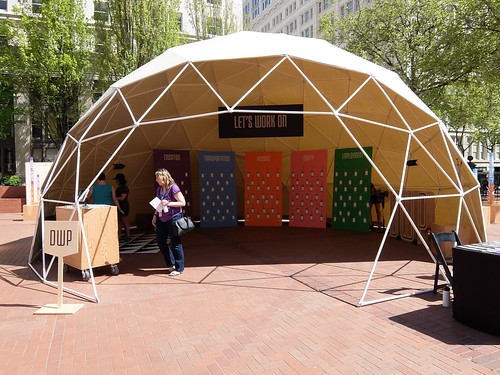
Glenn and I took the bus to the Design Week Portland headquarters in Pioneer Courthouse Square (a geodesic dome) and then met up with the two brothers near the KGW studio entrance (part of the Square).

We ended up at the Yard House for lunch, near the Apple Store.  Alan's presentation was later that evening at the Linus Pauling House.
Presenting at Thirsters
:: Alan presenting at Thirsters two days later ::

Sunday, April 17, 2016

Learnability (continued)


Ashley may be expressing some ambivalence here, about the direction of ES6 / ES7, I find it somewhat hard to tell.

She's loyal to the concept of teaching the language, but worries, rightly, about syntactic sugar obscuring and occluding the more deeply unifying concepts.

The best way to learn is to teach, that she knows.

Some of the new syntax she's clearly excited about, namely "destructuring".

The JavaScript community seems quite comfortable with "transpilers" such as Babel, which re-casts ES7/ES6 semantics in an earlier version.

This developer raves about destructuring too.


Other transpilers go to ES-whatever from TypeScript, CoffeeScript, ClojureScript...


Here's another one by Ashley helping us understand the npm (Node Package Manager) ecosystem.  She's right, the data are pretty sketchy.


Thursday, April 14, 2016

Musings on JavaScript

:: Douglas Crockford ::

I'm sorting through code school videos in the Youtube repository, and others, looking for exemplary recordings.  Today, I'm combing through Douglas Crockford movies.

No, you won't find him in IMDB I don't think (OK, maybe), but he's a star nonetheless.  He invented JSON and JSLint after having an epiphany that JavaScript was really a lot like Scheme under the hood (plus Self, and HyperCard) -- no accident given the history -- and that realization made him really brilliant.

Zooming out, it's the Lessons he teaches we should take to heart:  it's not that what we have today is the way it is because it had to be this way, nor because this way is best.

In the case of JavaScript, the vision of the Web was taking off and Netscape wanted to launch LiveScript at a critical time, when we needed previews.  What would this Web come to be?  Big business was willing to gamble.  Little puppet shows, with some LiveScript pulling the strings, would say a lot about the potential future, and so it shipped, one might say as a part of a much-needed demo.

And that, my children, is what we're calling JavaScript today.  Or ES6 or whatever we're up to.

Crockford is returning to his roots in wanting to dive deep into recursion, with tail optimized calls.  "JS will finally be a real functional programming language", he exclaims.

So lets remember that Lesson:  it's not the best way, it's not the only way, it's just the way, whatever it is.

We're stuck along some axes more than others.

We might define the axes in a negative sense, as precisely those things which cannot happen, leaving what can, constrained, as the allowed space of what's next.  Do we know enough about the rules to preclude... [you name it]?

Let me digress to mention a movie again:  Ten Cloverfield Lane.  How would you ramp it up, given a budget, in the direction of more and more surreal?

In a way I found it compelling how deeply into surrealism our imagination could take us.  Yet my reaction was the same as hers:  "oh gimme a break".

Like, what "miracle" would say to you that "reality is broken"?  Something impossible that is, like the aliens landing.  The thing is:  might not aliens land?

You'd likely not be not surprised to find out many humans believe we've already been invaded, with much disagreement on who by or what the symptoms are.  Most mythologies don't cast the aliens as helping us hold it together, much as the good Angels used to do (the bad ones worked for some Lucy or someone).

Our language leaves that loophole open, for "space invaders" -- one might say.  We're at the twilight of the empirical in entertaining such beliefs, on the fence not so much with what's false as what it makes no sense to say.  What makes us think our language makes us capable of thinking "anything we like"?  I'd say more the opposite is the case.

OK, digression over, sorry.  JavaScript is where I'm focused.

Why?

1.  Because Portland has long had its Admirers of JavaScript (a meetup and listserv I've been a part of).  "I won't need loops anymore, because we'll have tail calls" (Crockford again).

2.  But more than that:  it's a hugely prevalent language that's worth learning from the ground up, perhaps using Crockford's minimalist approach, which allows him to call it "silly" (just a prototype after all) while staying fairly proud of his own use of it (as audited by JSLint).

No code school gets away without teaching JavaScript at some level, and in a hand-wavy way is worse.  I want to get it more thoroughly myself, for a host of reasons, such as looming "boot camps" for math teachers (I use quotes to suggest they're maybe really not as strenuous as the "boot camp" metaphor makes out).

The real question is whether to have it at all levels, client through server, from Angular to Node to MongoDB.

I lean towards wanting to tackle more than one language and SQL, HTML and CSS by themselves don't stand up as Turing Complete if ya know what I mean.

JavaScript and something else, maybe Clojure.

Maybe Java or Python or C# (as a trio?), with an emphasis on whichever one the mentor wants to pick.  We go with the strengths of the mentor, why not, without discouraging cross-training and branching out.

Do we work in .NET or not?  I don't see why not.  I'm not against using free teaser products that hint at more and even better for pay.  I understand money is a medium.  Open Source is often itself the teaser, meaning a company uses it to showcase what must be a vibrant culture, to hatch and sustain such a cool thing.  I'm neither cynical about nor disapproving of this practice, quite the contrary.

Code schools that start small may be tempted to stretch too thin and teach too many subjects, because the materials don't teach themselves and people need mentors, both synchronous and asynchronous (either the adjective and the adverb work here).

A code school without mentors is not so much an oxymoron as one with ghost mentors and/or unsung volunteers, which may be people willing to guinea pig themselves (like "Guinea Pig B", aka Bucky aka RBF).  That's pretty extreme though.  The word "school" has never been synonymous with "robot" and it's a stretch to make it mean that right now.

My theory is the geek etymology, with roots in the carnival business, show business more generally (even stage magic), comes with this idea of "rides" which are indeed "engines" that create experiences, such as roller coasters and Ferris wheels.

Lets remember these are real characteristics of the user experience in cyber-ville:  we do build little rides and theme parks for people (they're called web sites) that treat everyone the same way.  There's lots of automaticity involved, but nevertheless, every pinball game is different.

What I hadn't realized about JavaScript is its deep investment in IEEE 754 floating type as the only type, whereas Douglas is sensitive to the COBOL crowd's need for reliable monetary computations, and true Decimal computations.

We have the Decimal type in Python.  There's an advantage to having several Number types.

DEC64 sounds smart though.

He's entirely open to a next language, star Crockford is.  He's ready to create the space for us to try something new.

Why not something parallel to the Internet to fall back on, made of different parts?  I saw a talk on that topic as well, by someone else stellar.

Call it research.  Call it your company's Diversity policy, in action.  I'm not the one to boss you around, no worries.  I'm just celebrating our liberal openness to new languages and alternatives to what we tend to take for granted.

Having working languages already, dependable, responsible, is a gift as well.  In clinking my glass and toasting the future, I'm not thereby dissing the past, a misunderstanding that's easy to have, sometimes all too hard to let go of.

"We never change the minds... we just have to wait for them to die" (laughter, applause).  "Can we get rid of GOTO now?"  Hah hah.

He's really into lambdas, which is spelled 'function' in JavaScript.  You don't have to name it or remember it, just do it.

What does he think about Go I wonder, Crockford I mean?

That's something I could Google up no doubt, or even Bing.  Is Go not close to the metal enough to qualify as a systems language?

What I wonder, given such as ClojureScript and Brython (a topic in Cuba these days), is:  if JavaScript is to be seen as the Assembler of the Internet, should we maybe just use it like that, to implement mostly other languages?

Stay in Clojure or Python in the client, knowing you've got some V8 or whatever under the hood?

Is JavaScript more like our most refined grade of engine oil in Web 3.0?  Made of only the good parts I mean?